그리스-터키 관계
Greece–Turkey relations | |
 그리스 |  터키 |
|---|---|
| 공관 | |
| 주그리스 대사관 | 주터키 대사관 아테네 |
그리스와 터키의 관계는 오스만 제국으로부터의 독립 선언 이후 그리스가 형성된 이후 1830년대에 시작되었습니다.현대 관계는 터키가 1923년 제1차 세계대전에서 오스만 제국의 패배 이후 형성을 선언하면서 시작되었습니다.
그리스와 터키는 민족주의를 정당화하기 위해 사용된 사건들의 역사와 경쟁 관계에 있습니다.[1][2]이 사건들에는 그리스와 터키간의 인구교류, 이스탄불 포그롬, 키프로스간의 공동체간 폭력사태 등이 포함되어 있습니다.1930년부터 1955년까지 그리스와 터키의 반목은 국제 관계에서 중요한 요소가 아니었고, 냉전 기간 동안 국내 정치와 양극 정치는 서로에 대한 경쟁 행위를 제한했습니다.[3][4]1990년대 중반과 이후 수십 년 동안, 그들의 경쟁에 대한 이러한 구속은 사라졌고, 두 나라는 서로의 가장 큰 안보 위험이 되었습니다.[5][6]
지중해 동부와 에게해의 지배권은 이 나라들의 경쟁의 근간으로 남아있습니다.제2차 세계대전의 여파로 UNCLOS 조약, 키프로스의 탈식민지화, 도데카니사 제도의 그리스 영토 추가 등으로 관계에 혼란이 야기되었습니다.바다와 공중에 대한 영토 분쟁, 소수 민족의 권리, 터키와 유럽 연합(EU) 및 회원국들과의 관계, 특히 키프로스와의 관계를 포함한 여러 문제들이 그들의 현재 관계에 자주 영향을 미칩니다.[7][8]에너지 파이프라인에 대한 통제도 그들의 관계에서 점점 더 중점을 두고 있습니다.
공관
그리스와 오스만 제국 사이의 첫 공식적인 외교적 접촉은 1830년에 일어났습니다.[9]양국간의 영사관계는 1834년에 수립되었습니다.[10]1853년, 이스탄불에 그리스 대사관이 개설되었습니다; 위기의 시기에 중단되었고 결국 터키 공화국이 형성된 1923년에 새로운 수도 앙카라로 옮겨졌습니다.[10]
그리스 주재 터키 대사관에는 아테네 주재 대사관과 테살로니키, 코모티니, 로즈 총영사관 등이 있습니다.[11][12][13][14][15]터키 주재 그리스 대사관에는 앙카라 주재 대사관과 이스탄불 주재 총영사관, 이 ̇즈미르, 에디르네 등이 있습니다.
-
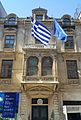
주이스탄불 그리스 총영사관
-
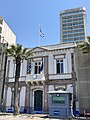
이즈미르 주재 그리스 총영사관


역사
배경
비잔티움 제국과 오스만 제국의 역사는 터키와 그리스 사이의 현대 관계에 영향을 미칩니다.[21]Anthony Kaldellis는 비잔틴 제국을 그리스 국가와 전근대 국가의 중세적인 표현으로 봅니다.[22]터키는 후계국이 아니라 오스만 제국이 공화국으로 합법적으로 존속하고 있다는 논란이 있습니다.[23][24]
소아시아(아나톨리아)에서의 그리스의 존재는 후기 청동기 시대(기원전 1450년) 또는 그 이전으로 거슬러 올라갑니다.[25]튀르크 제1차 카간국의 괴크튀르크족은 튀르크라는 이름을 정치적으로 사용한 최초의 튀르크 국가였습니다.[26]비잔티움 제국과의 첫 접촉은 서기 563년에 일어난 것으로 생각됩니다.[27][28]10세기에 셀주크 터키인들이 권력을 잡았습니다.[29]
비잔티움 제국과 셀주크 투르크 사이의 첫 번째 갈등은 1048년 카페트론 전투에서 일어났습니다.더 주목할 만한 것은 1071년 만지케르트 전투와 그 뒤를 이은 터키의 아나톨리아 정착입니다.나중에, 터키 아나톨리아 베이크들이 이전 비잔틴 땅과 분열된 셀주크 술탄국의 영토에 세워졌습니다.[30]그들 중 하나는 오스만 제국이 된 오스만 왕조였습니다.[31][32] 1453년, 오스만 제국은 비잔틴 제국의 수도인 콘스탄티노플을 정복했습니다.[33]
현대 그리스와 터키의 대부분은 15세기에 오스만 제국의 지배를 받았습니다.[34]이후 몇 세기 동안, 오스만 제국의 지배에 반대하는 그리스인들의 봉기는 산발적으로 일어났지만 성공하지 못했습니다.[35]그리스 민족주의는 18세기에 나타나기 시작했습니다.[36]1821년 3월 그리스 독립전쟁이 시작되었습니다.[37]
그리스와 오스만 제국의 관계: 1822–1923

그리스 독립 전쟁 이후, 그리스는 1830년에 독립 국가로 형성되었습니다.[38]그리스와 오스만 제국의 관계는 동방 문제와 메갈리 사상에 의해 형성되었습니다.[39][40]크림 전쟁 중인 1854년의 이피루스 반란, 1878년 그리스 마케도니아 반란, 러시아-터키 전쟁(1877-1878) 중인 1878년의 이피루스 반란 등이 양국 간의 갈등입니다.오스만 제국과 그리스 사이의 전쟁에는 그리스-터키 전쟁 (1897)과 두 개의 발칸 전쟁이 있습니다.부쿠레슈티 조약(1913년)으로 인해 제2차 발칸 전쟁이 끝날 때까지 그리스는 3분의 2가 증가했습니다; 그리스는 64,790km에서 108,610km2 (25,020km2에서 41,930km2)로 증가했고 인구는 2,660,000명에서 4,363,000명으로 증가했습니다.[41]제1차 세계 대전에서 연합국이 승리하면서, 그리스는 뇌이쉬르센 조약에서 서부 트라키아에 대한 주권을, 세브르 조약에서 동부 트라키아와 스미르나 지역에 대한 주권을 받았습니다.그리스의 이득은 뒤이어 일어난 그리스-터키 전쟁 (1919–1922)으로 인해 크게 이루어지지 않았습니다.[42]


1919년 5월 15일 그리스는 스미르나를 점령했고, 세브르 조약에 반대하는 터키군의 지도자가 될 무스타파 케말 파샤(이후 아타튀르크)는 1919년 5월 19일 삼순에 상륙했습니다.무스타파 케말은 아나톨리아에서 항의하는 목소리를 통합하고 오스만 제국을 점령한 연합군을 격퇴하고 주권국 터키의 새로운 국경을 세우기 위한 민족주의 운동을 시작했습니다.터키는 문명의 서구화가 될 것이며, 아랍 문화 아래에서 사라져버린 터키 문화를 고양시킬 것입니다. 이는 이슬람과 아랍 문화를 분리하고 사적인 영역으로 제한하는 것을 포함합니다.[43]
앙카라의 터키 의회는 공식적으로 술탄국을 폐지했고 로잔 조약(1923)은 모든 분쟁을 종식시키고 이전의 조약들을 대체하여 현대 터키를 구성했습니다.[44][45]그 조약은 그리스와 터키 사이의 인구 교환을 제공했습니다.[46]
이 조약은 또한 1914년에서 1922년 사이에 저지른 범죄의 가해자들에 대한 사면 선언을 담고 있는데, 이 기간은 많은 잔혹 행위로 특징지어집니다.[47][48]그리스인 집단 학살은 제1차 세계 대전 이전에 시작되어 전쟁과 그 여파(1914-1922) 동안 지속된 기독교계 오스만 그리스인 아나톨리아의 조직적인 학살입니다.[49][50]
그리스와 터키의 초기 관계: 1923~1945

인구 교환에 이어 그리스는 적대관계를 청산하기를 원했지만 교환된 인구의 재산에 대한 가치 평가 문제로 인해 협상이 지연되었습니다.[51][52]엘레프테리오스 베니젤로스가 무스타파 케말 아타튀르크와 협력하여 추진한 것과 이 ̇메트 이 ̇뇌뉘 정부가 1930년에 그리스와 터키 사이에 일련의 조약이 체결되어 사실상 그리스-터키 관계를 회복하고 두 나라 사이에 실질적인 동맹관계를 수립했습니다.이러한 조약들의 일환으로, 그리스와 터키는 로잔 조약이 각각의 국경의 최종 해결책이 될 것이라는 데 동의하고, 반대하는 군사적 또는 경제적 동맹에 가입하지 않을 것이며, 해군 군비 경쟁을 즉각 중단할 것이라고 약속했습니다.[53]
1934년 발칸 조약이 체결되었는데, 그리스와 터키는 유고슬라비아와 루마니아와 함께 상호 원조 조약을 체결하고 미해결 문제를 해결했습니다.베니젤로스는 1934년 아타튀르크를 노벨 평화상 후보로 지명했습니다.[54]
그리스는 1936년 터키에게 보스포루스 해협과 다르다넬스 해협에 대한 통제권을 주고 해군 군함의 수송을 규제하는 협정의 서명국이었습니다.그 나라들은 1938년 살로니카 협정에 서명했는데, 이 협정은 그리스와의 터키 국경을 따라 있는 비무장지대를 포기한 것이며, 이것은 로잔 조약의 결과입니다.[55]
1941년, 2차 세계 대전 동안 터키의 중립 때문에, 영국은 추축국 점령 기간 동안 아테네의 대기근을 완화하기 위해 봉쇄를 해제하고 터키로부터의 곡물 운송을 허용했습니다.SS 쿠르툴루 ş호를 이용하여 터키 적신월사 크 ı즈 ı레이의 전국적인 캠페인에 의해 식료품을 모았고, 이 작전은 미국 그리스 전쟁 구호 협회와 콘스탄티노폴리스의 그리스 연합이 자금을 지원했습니다.
이 기간 동안 터키에 남아있던 그리스 소수민족들은 차별적인 표적 공격에 직면했습니다.1941년 제2차 세계 대전을 예상하고 20계급에서 성인 남성 아르메니아인, 그리스인, 유대인들이 노동대대로 징집되었습니다.[57]1942년, 터키는 터키의 비이슬람 소수민족들에게 큰 영향을 미친 특별세인 발 ı크 베르기시를 부과했습니다.공식적으로, 세금은 독일이나 소련이 그 나라를 침략했을 때 필요했을 국고를 채우기 위해 고안되었습니다.그러나 이 세금의 주요 목적은 소수 민족의 영향력을 감소시키고 터키의 무역, 금융, 산업에 대한 통제를 줄임으로써 터키 경제를 국유화하는 것이었습니다.[58]
제2차 세계 대전 후의 관계: 1945-1982

전쟁 후 추축국 점령이 끝나면서 남겨진 권력 공백에 이어, 그리스 내전은 냉전의 첫 번째 갈등 중 하나로 발발했습니다.이는 냉전이 동맹국이 아닌 국가의 내정에 개입한 첫 사례입니다.[59]터키는 해협에 대한 외국의 통제로 인해 소련의 중심지였습니다; 그것은 냉전의 발발의 중심적인 이유였습니다. 1950년, 그리스와 터키는 한국전쟁에서 싸웠고, 터키의 외교적 고립을 종식시키고 북대서양조약기구(NATO)에 가입하도록 초대했습니다;[61] 1952년, 양국은 NA에 가입했습니다.1953년 그리스, 터키, 유고슬라비아는 소련에 대항하는 상호 방어를 위한 새로운 발칸 조약을 맺었습니다.[62][63]

싱크탱크 지정학적 미래에 따르면 1945년 이후 양국 관계의 악화에 기여한 사건은 다음과 같습니다.[65]
- 제2차 세계 대전에서 이탈리아가 패배한 후 베니젤로스 제도 이후로 골치 아픈 점이었던 도데카니사 군도에 대한 오랜 영유권 문제.그리스와 이탈리아 사이의 티토니 협정은 1946년에 그리스의 호의로 해결되었고, 힘의 균형을 바꾸었기 때문에 터키를 화나게 했습니다.[66][67]터키는 로잔 조약에서 도데카니즈에 대한 영유권을 포기했지만, 미래의 행정부는 안보상의 이유로, 그리고 아마도 키프로스 문제 때문에 그것들을 원했습니다.[67]
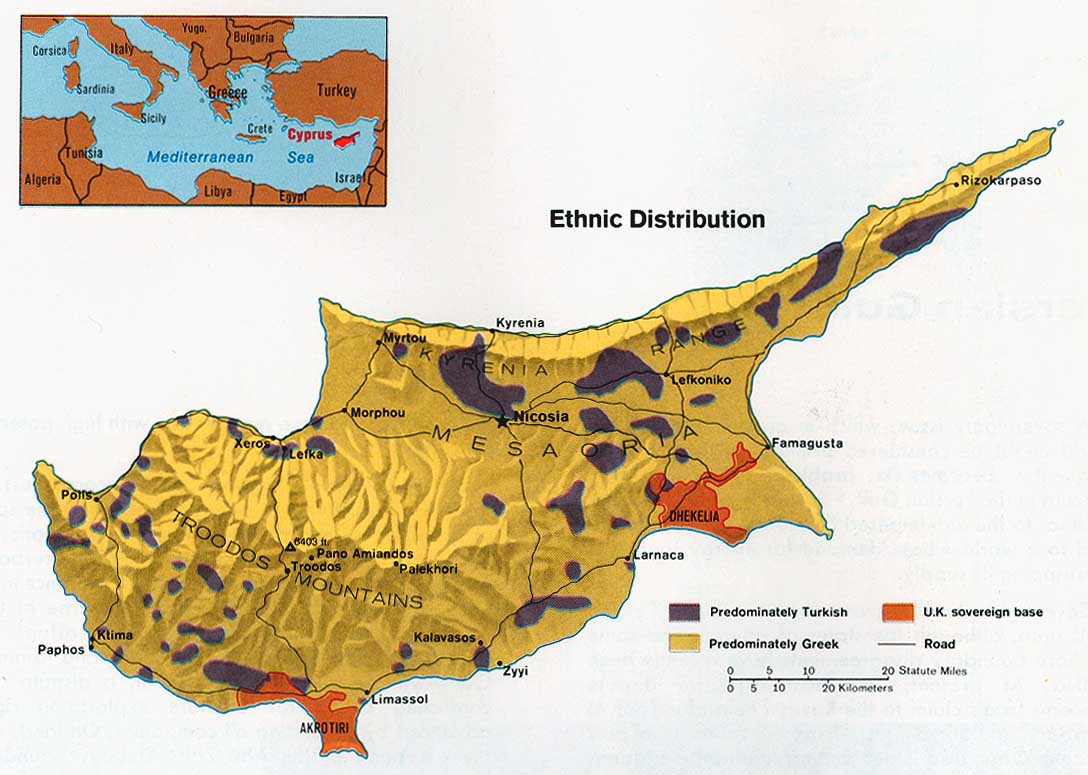
- 키프로스의 탈식민지 이후, 그리스인과 터키인 사이의 갈등이 섬에서 발생했습니다.[65]1950년대에, 에노시스에 대한 추구는 그리스의 국가 정책의 한 부분이 되었습니다.[68]탁심은 일부 터키계 키프로스인들에 의해 적폐에 대한 반응으로 구호가 되었습니다.[69][70][71]그리스와 터키 사이의 긴장이 고조되었고, 그리스 정부의 George Papandreou에 의한 키프로스에 대한 양가감정이 그리스 군사 쿠데타로 이어졌습니다.[72]1974년 그리스 정부는 키프로스를 침공하고 그리스가 통치하는 키프로스 정부를 수립함으로써 키프로스 대통령과 마카리오스 대주교를 상대로 쿠데타를 일으켰습니다.[73][74][75][76][77]곧이어 터키는 1959-1960년 취리히와 런던 협정의 3국 협정에 따른 보증인 지위를 이용해 키프로스를 침공했습니다.[78]터키 키프로스 연방은 1년 후에 선포되었습니다.[79]
- 1958년에 시작하여 1982년에 영해 문제를 위해 확장된 유엔해양법협약(UNCLOS)은 17세기로 거슬러 올라가는 바다의 자유라는 오래된 개념을 대체했습니다.이 개념에 따르면, 국가의 권리는 3마일 제한으로 알려진 보통 3해리(5.6km; 3.5mi)의 해안선에서 뻗어있는 특정 수역으로 제한되었습니다.1967년까지 30개국만이 여전히 이 오래된 3해리 조약을 사용했습니다.[80]1972년 그리스에 의해 비준되었으나 터키는 1974년 이래 에게해의 중간선을 대신[81] 사용하는 양자간 해결책을 요구하며 비준하지 않았습니다.

1955년 아드난 멘데레스 정부는 도시의 상당한 그리스 소수 민족과 다른 소수 민족을 목표로 한 이스탄불 포그롬을 조직한 것으로 추정됩니다.[82][83]1955년 9월 그리스 제2의 도시 테살로니키의 터키 영사관 근처에서 폭탄이 터져 아타튀르크의 생가가 있던 아타튀르크 박물관이 파손되고 유리창이 일부 깨졌지만 다른 피해는 거의 없었습니다.[84]이에 대한 보복으로 이스탄불에서는 그리스 소수민족에 속하는 수천 개의 상점과 집, 교회, 무덤들이 몇 시간 만에 파괴되었고, 12명 이상이 사망하고 더 많은 사람들이 부상을 입었습니다.[85]키프로스의 지배권을 놓고 터키와 그리스 사이에 벌어지고 있는 투쟁과 키프로스 간의 공동체간 폭력은 포그롬과 동시에 발생했습니다.[86][87]키프로스를 논의하고 국내 정치 문제에서 벗어나 관심을 유도하라는 런던 회의에 대한 압력은 터키 멘데레스 정부의 가능한 동기였습니다.[88]
1964년, 터키의 총리 이 ̇메트 이 ̇뇌뉘는 1930년의 그리스-터키 우호조약을 포기하고 그리스 소수민족에 대한 조치를 취했습니다.약 5만명의 그리스인들이 추방당했습니다.[91]1971년 터키의 법은 종교 고등학교를 국유화하고 이스탄불의 헤이벨리 섬에 있는 할키 신학교를 폐쇄했는데, 이것은 21세기 관계에 영향을 미치는 문제입니다.[92][93]
현대사와 이슈

군사 및 외교적 긴장 관계
20세기 말로 가면서, 그 나라들 사이에 여러 유명한 사건들이 있었습니다.1986년 에브로스 강의 국경에서 그리스 군인 한 명이 총에 맞아 사망했습니다.[94]1987년, 터키의 측량선 시스믹 1호가 거의 전쟁을 촉발시킬 뻔 했습니다.[95]1995년, 두 나라가 영유권을 주장하고 있는 이미아라고 불리는 무인도에 대한 군사적 위기가 발생했습니다.
양쪽이 사격을 주고받는 경우가 적습니다.이것은 관계가 긴장되고 전쟁이 시작될 위험이 있을 때 변동성을 만듭니다.[96][97]
1990년대에 그리스는 터키를 포위하는 정책을 추진했습니다.[98]유고슬라비아의 해체 이후, 그리스와 터키는 새로운 국가들과 관계를 발전시키면서 서로를 의심하는 시선을 가졌습니다.[99]그러나 1995년에 이러한 두려움이 현실화되었습니다.[98]그리스는 시리아와 방위 협력 협정을 맺었고, 1995년과 1998년 사이에 터키의 다른 이웃 국가인 이란과 아르메니아와 좋은 관계를 맺었습니다.[100]이에 대한 대응으로 터키는 1996년 이스라엘과 대화를 나눴고, 이는 아랍 국가들을 떠들썩하게 만들었습니다.[101]
미국 육군 전쟁 대학의 크레이그 네이션 박사는 이 나라들 간의 분쟁을 에게 해와 지중해 동부에 대한 지배권을 놓고 벌이는 싸움으로 보고 있습니다.[102]
긍정적 관계

1995년, 우선순위를 재정립한 코스타스 시미티스의 그리스 선거로 관계가 바뀌기 시작했지만, 그 다음 해에 외무장관 회의가 열리면서 비로소 이 사실을 알게 되었습니다.[106]1998년, 케냐 주재 그리스 대사관에서 오는 길에 쿠르드 분리주의자 압둘라 외칼란을 체포하고, 이와 관련된 여파로 인해 그리스 외무장관이 사임하게 되었고, 후임자는 터키와의 논의에 대한 강력한 지지자였습니다.[107][108]1999년 아테나이 지진에 이어 1999년 이 ̇즈미트 지진은 호의의 분출과 관계의 변화를 도왔던 지진 외교로 이어졌습니다.
그 후 몇 년 동안 관계는 개선되었습니다.[111]그것들은 조직범죄와의 전쟁, 군사비 절감, 불법 이민 방지, 그리고 국경의 지뢰 제거에 관한 협정들을 포함하고 있습니다.또한 그리스는 터키의 유럽연합(EU) 가입에 대한 반대 입장을 철회했습니다.[112]크레이그 네이션 박사는 많은 진전이 있었지만 결국 중요한 문제에 대해서는 진전이 없었다고 말합니다.[113]
에게 해와 지중해 동부 분쟁
터키와 그리스 사이의 갈등은 주로 그리스 섬들이 바다에 대한 권리를 주장하는 기반인 배타적 경제수역을 허용하느냐를 두고 벌어졌습니다.[114][115]일부에서는 주권 상실에 대한 두려움이 이 갈등의 원인이라고 주장합니다.[116]레제프 타이이프 에르도 ğ안 치하에서 터키의 블루 홈랜드 정책이 등장했습니다.해안으로부터 3마일(4.8km) 이내에 있는 섬들과 이잉섬들은 로잔 조약에 따라 각각의 주에 포함되었습니다.[118]그리스는 1936년에 이 제한을 6마일(9.7km)로 연장하여 논란이 되었는데, 터키는 좋은 관계 때문에 이의를 제기하지 않았고 1964년에 이 제한을 비준했습니다.[119]유엔해양조약 UNCLOS 회의는 1982년에 영해를 정의하고 1994년에 발효되었습니다.[120][121]
이 조약의 서명국은 168개국으로 그리스는 포함되지만 터키는 포함되지 않습니다.[122]터키는 그리스가 자국의 섬들의 해안으로부터 12마일 떨어진 곳에 대한 영유권을 주장할 수 있다고 주장하고 있는데, 이는 해상조약이 허용하고 있는 것으로, 본토만이 이 권리를 가지고 있음을 의미하며, 그렇지 않을 경우 그리스가 에게 해에 대한 지배적인 지배권을 갖게 될 것입니다.[114]터키는 에게해를 중간에 쪼개서 경제권을 주장하고 나섰습니다.[123]유럽연합은 바다조약 가입을 조건으로 요구하고 있습니다.[124]
지중해의 다른 나라들과의 갈등이 확대되고 있습니다.터키는 2019년과 2022년 리비아와 바다에 대한 경제적 권리를 확대하기 위해 협상을 벌였는데, 이는 그리스, 이집트와 맞섰습니다.[125][126][127]
키프로스 분쟁은 그 후의 군사력 증강을 만들었습니다.[128][129]그리스가 키프로스에서 쿠데타를 일으켜 터키가 키프로스를 침공하면서 분쟁이 확대되었습니다.1974년, 그리스는 터키 연안의 그리스 섬들을 군사화하는 것으로 대응하였는데, 이 섬들의 합법성에 대해 터키가 이의를 제기하고 있습니다.1975년 터키는 이즈미르 군 기지를 만들었습니다.2022년의 군사력 증강은 계속되고 있습니다.[130][131][132][133][134][excessive citations]
키프로스와 유럽 연합

그리스는 1981년부터 EU의 회원국이었습니다.[135]키프로스는 2004년에 가입했습니다.[136]터키는 1987년에 가입 신청서를 제출했고 1999년에 정식 후보가 되었습니다.[137]
1999년까지 그리스는 터키의 EU 가입을 막는데 외교적 노력을 집중하였으며,[98][112] 터키에 대한 우려는 인권상황과 그리스의 거부권 행사로 인해 결국 터키가 EU로부터 무시당하게 되는 결과를 낳았습니다.[138] 이는 터키의 세속주의적인 케말리즘에서 벗어나 정치적 이슬람주의의 발흥에 기여하였습니다.[139]오스만 제국의 과거에 대한 케말리즘 기억상실증에 변화가 있었고, 이는 대신 터키에 자부심과 정체성의 원천이 되었습니다.[140]케말리즘은 터키가 유라시아의 신흥 정치지형에서 지역 중심지가 되면서 유럽지향의 대안적 정체성으로 발전했습니다.[140]
1990년대에 키프로스와 관련된 터키의 EU 가입을 둘러싼 마찰은 터키와 그리스 간의 군사적 긴장과 병행되었습니다.[141]1994년, 그리스와 키프로스는 키프로스에서 터키의 군사 행동이 그리스와 전쟁을 일으킬 것이라는 안보 교리에 합의했습니다.[142]1997년, 키프로스는 소련 시절의 S-300 미사일 시스템 두 대를 구입하여 키프로스와 터키 사이의 정치적 대립을 초래했습니다.[143]터키 측이 북키프로스를 독립 국가로 인정한 탓에 1990년대 섬의 분단 협상은 실패로 돌아섰고, 2022년 현재 남아있는 문제가 남아 있습니다.[144][145]2004년 키프로스가 EU에 가입했을 때, 터키의 가입에 대한 협상은 키프로스의 거부권 행사로 인해 교착 상태에 빠졌습니다.[146]
터키의 이주 위기는 유럽연합과의 관계에도 큰 영향을 미쳤습니다.[147]이리니 작전에 대한 무기 금수 조치의 시행으로 다른 EU 회원국들은 터키와 갈등을 빚었습니다.연구선 RV MTA 오루스 레이스를 이용해 그리스와 분쟁 중인 영토에 가스 시추를 한 것이 터키에 대한 EU의 제재로 이어졌습니다.[148][149][150][excessive citations]
에너지 파이프라인

2010년 이스라엘과 이집트가 처음 지중해 동부에서 천연가스 매장량을 발견하면서 그리스와 터키 사이에 긴장이 고조되었습니다.[151]이 지역은 세계적으로 알려진 천연가스 매장량의 5%를 포함하는 것으로 추정됩니다.[152]에게 해와 키프로스의 역사적 안보 문제는 유럽의 에너지 수요 해결에 중요합니다.[152]2016년 터키-이스라엘 화해로 그리스는 2017년 키프로스-유엔 회담을 방해하여 이스라엘과 터키가 가스관을 개발하는 것을 막았습니다.[151]2019년에는 터키를 제외한 7개국을 포함한 동지중해 가스 포럼이 창설되었습니다.[151]
이 지역은 동서 파이프라인의 종점으로 여겨집니다.[141]2007년, 이 나라들은 그리스-터키 천연가스 파이프라인을 개통하여 카스피해에서 나오는 가스를 최초의 서방 직통 출구로 제공했습니다.[153]카스피해는 480억 배럴의 매장량과 [154]292조 입방피트의 천연가스를 보유한 것으로 추정되는 가장 오래된 산유국 중 하나입니다.[154]이들 분야의 개방은 2018년 카스피해의 법적 지위에 관한 협약에 이어 20여 년간의 협상에 이어 이뤄졌습니다.[155]카스피해 연안 국가들 이외에도 국가들의 지리적 위치를 활용하고자 하는 다른 공급자들이 있습니다.그리스는 2022년 5월 터키의 경쟁국인 아랍에미리트와 UAE 액화천연가스 유통 계약을 체결했습니다.[156][157]
소수자 권리
로잔 조약은 터키의 그리스 정교회 소수파와 그리스의 이슬람 소수파를 보호하는 것을 제공했습니다.[158]터키 내 그리스계 소수민족은 1923년 20만 명을 넘던 것이 2023년 2천 명으로 줄었고, 그리스 내 터키계 소수민족은 같은 기간 12만 명으로 꾸준히 유지되고 있습니다.[citation needed]
그 이후 양국의 소수민족들은 그들 사이의 관계 상태에 영향을 받아왔습니다.소수자들은 상호주의의 원칙을 이용하여 지렛대로 사용됩니다.[159]1960년대, 키프로스 문제가 확대되자 터키는 터키의 그리스계 소수민족들을 압박했습니다.[160]터키는 1971년 폐쇄된 할키 신학교를 개교하기 위한 조건으로 그리스 내 이슬람계 터키인 소수민족이 무프티스를 선출한 것을 이용했습니다.[160]1972년 반작용으로 그리스는 로도스에 있는 터키 학교를 폐쇄했습니다.[160]최근 몇 년[when?] 동안 터키는 수멜라 수도원과 같은 문화 유산을 정치적 목적을 달성하기 위해 사용해왔습니다.[161][162]

소수자 학대의 예는 다음과 같습니다.
- 제2차 세계대전 동안, 터키는 그들의 산업을 국유화했고 소수자들을 대상으로 하는 차별적 부유세인 발 ı크 베르기시를 부과했습니다.
- 터키는 터키의 경제 문제를 그리스 탓으로 돌리면서 이스탄불 포그롬을 초래했습니다.[160]
- 1967년, 그리스 군사 정부는 도데카니사 반도의 터키 시민들을 추방했습니다.[160]
- 1955년, 그리스의 국적법 제19조에 따라 그리스 시민들의 두 계층이 생겨났습니다; "비그리스계"인 이들은 그 나라를 떠날 경우 시민권을 상실했습니다.1998년 폐지 당시 6만 명이 시민권을 잃었고, 폐지는 소급효가 없었습니다.[164]
그리스의 무프티스 선거와 터키의 할키 신학교 재개관 문제가 가장 큰 쟁점이 됐습니다.[93]정치적 권위와 전제조건을 둘러싼 문제들이 교착상태의 원인이 되고 있습니다.[165][166][167]조지 파판드레우 전 그리스 총리는 터키와 그리스가 소수민족을 외국인이 아닌 시민으로 취급한다면 혜택을 볼 것이라고 말했습니다.[165]
이주민

터키는 유럽으로 들어오는 사람들의 통과국이 되었습니다.[169]2015년에는 터키에서 그리스를 거쳐 발칸반도 국가들을 통과하는 경로가 중동과 북아프리카의 분쟁을 탈출하는 이주민들에게 가장 많이 이용되는 경로가 되었으며, 더 먼 동방으로부터의 불규칙한 이주가 계속되고 있습니다.[147]터키는 솅겐 지역을 변칙적인 이주로부터 보호하는 수호자의 역할을 맡았습니다.[147]이것은 터키의 이주 위기와 결합하여 불법 이주가 터키와 유럽연합 사이의 중요한 문제가 되는 결과를 낳았습니다.[147] 그리스와 터키의 국경을 넘어 이동하는 사람들은 두 나라 사이의 빈번한 사건들의 원인입니다.[170][171][172][173][174][175][excessive citations]
2016년 유럽연합과 터키는 이주 위기에 대한 협상을 타결했습니다.4년 약정이 2022년까지 연장되면서 어느 정도 성공을 거두었지만, 몇 가지 사건이 발생했습니다.2019년 그리스 정부는 이전과 유사한 새로운 이민자 위기가 발생할 것이라고 경고했습니다.[176][177][178][excessive citations]
터키의 저항세력과 망명신청자들
슬레지해머라고 불리는 2003년 터키에서 군사 쿠데타 시도를 조직한 혐의로 기소된 사람들에 대한 2010년 재판 동안, 그 공모자들은 모스크에 대한 공격을 계획한 혐의로 기소되었습니다.터키가 자국 전투기 중 한 대를 격추하고 그리스인들을 비난하며 이스탄불에 폭탄을 설치하여 군사적 탈취를 시작함으로써 그리스와의 갈등을 촉발시켰습니다.[179][180][181]
그리스는 터키에서 공격을 계획한 DHKP-C 조직원들을 여러 차례 체포했습니다.[182][183][184]터키는 그리스가 DHKP-C와 같은 테러리스트들을 지원하고 있다고 비난했습니다.[185]
터키는 대통령을 모욕한 혐의로 기소된 정치인 레일라 벌릭과 같이 터키 난민들을 초래하는 권위주의로의 미끄러짐을 목격했습니다.[186]이는 2016년 터키 쿠데타 시도가 실패한 이후 군인 등 995명이 망명을 신청한 이후 증가한 것입니다.[187][188][189][190][191][192][193][194][195][196][197][198][excessive citations]2017년 그리스에 망명을 요청한 터키 시민은 암살을 모의한 이들을 포함해 1800명이 넘습니다.[199][200]때때로, 이것은 다른 지역의 국가들 사이에 긴장을 야기시킵니다.[201][202][203][excessive citations]
타임라인
| 연도 | 날짜. | 이벤트 |
|---|---|---|
| 1923 | 1월30일 | 터키와 그리스, 그리스 인구교류협약 체결[204] |
| 7월24일 | 로잔 조약이 체결되었습니다.[205]그것은 1924년 8월 6일에 발효될 것입니다. | |
| 1926 | 6월26일 | 임브로스 섬과 테네도스 섬의 지방 행정에 관한 마할리 이다레르 카누누(지방 정부법; No. 1151/1927)가 출판되었고, 이는 섬들의 지방 통치를 박탈했습니다.[206]이것은 로잔 조약의 14조를 무효화하는 것으로 보여졌습니다; 그 조항들은 결코 지켜지지 않았다고 주장합니다.[207] |
| 1933 | 9월14일 | 그리스와 터키는 우호조약을 체결합니다.[208] |
| 1934 | 2월9일 | 그리스와 터키, 루마니아와 유고슬라비아는 상호 방위 조약인 발칸 조약에 서명합니다.[209] |
| 1938 | 4월27일 | 그리스와 터키는 1930년 10월 30일 우호, 중립, 화해, 중재 조약에 추가 조약을 체결하고 1933년 9월 14일 우호 조약을 체결합니다.[210] |
| 1941 | 10월6일 | SS 쿠르툴루 ş는 추축국의 그리스 점령 기간 동안 대기근을 완화하기 위해 그리스에 인도주의적 지원을 전달하는 다섯 차례의 항해 중 첫 번째 항해를 시작합니다. |
| 1942 | 11월11일 | 터키는 자국 산업을 국유화하고 그리스 소수민족을 포함한 비이슬람교도 소수민족을 대상으로 하는 차별세인 발 ı크 베르기시를 제정합니다. |
| 1947 | 3월31일 | 영국 당국, 이탈리아와 평화조약 체결로 도데카니사 제도 그리스에[212] 넘겨 |
| 1950 | 그리스와 터키는 모두 유엔군 편에서 한국전쟁에 참전합니다.[213] | |
| 1952 | 2월18일 | 그리스와 터키는 공식적으로 나토의 회원국이 됩니다.[214] |
| 1953 | 2월28일 | 그리스, 터키, 유고슬라비아 간의 발칸 조약이 제정되었습니다.[215] |
| 1955 | 9월 6~7일 | 이스탄불 그리스인들이 타깃이 된 이스탄불 포그롬이 발생합니다.[160] |
| 1963 | 12월 21일 | 블러디 크리스마스 (1963)[216][217] |
| 1964 | 터키 총리 이 ̇메트 이 ̇메트는 1930년 그리스-터키 우호조약을 파기하고 그리스 소수민족에 대한 조치를 취했습니다. | |
| 1971 | 할키 신학교의 고등교육 구성 요소이자 터키 내 그리스 소수민족이 성직자들을 교육했던 유일한 학교인 할키신학대학은 터키 당국에 의해 폐쇄되었습니다.종교적 또는 학문적인 민간인, 이슬람교도와 비이슬람교도 모두 그 해에 문을 닫습니다.[218] | |
| 1971-74 | 그리스의 타소스 섬 근처 에게 해 북부에서 석유가 발견되고 있습니다.[219]1960년대 중반 탐사가 시작된 이래 최초의 주요 발견입니다.[220] | |
| 1974 | 7월15일 | 그리스 군사정권은 1974년 키프로스[221] 쿠데타를 후원합니다. |
| 7월 20일 ~ 8월 18일 | 터키는 키프로스를 침공합니다.[221] | |
| 1987 | 3월 27일~30일 | 1987년 에게 해 위기[222] |
| 1994 | 3월7일 | 그리스 정부는 5월 19일을 폰토스 그리스인 집단학살 (1914–1923)을 기념하는 날로 선포합니다.[223] |
| 1995 | 7월21일 | 그리스는 1982년 유엔해양법협약을 비준했습니다 터키는 만약 그리스가 영해를 12nm로 확장할 경우 이 조약의 발효는 카수스 벨리가 될 것이라고 밝혔습니다.[225] |
| 12월26일 | 이미아카르닥 사태[222] | |
| 1997 | 1월5일 | 키프로스 미사일 위기[222] |
| 1999 | 압둘라 외칼란(쿠르드 반군 지도자) 그리스 대사관 떠나 케냐서 붙잡혀[222][226] 위기 | |
| 2001 | 9월14일 | 그리스 정부는 9월 14일을 터키 국가에 의한 소아시아의 헬레네스 집단학살을 추모하는 날로 선포합니다.[223] |
참고 항목


- 그리스의 역사
- 터키의 역사
- 키프로스의 역사
- 헬레노투르크주의
- 그리스, 터키, 키프로스, 북키프로스의 대외 관계
- 유럽 연합-터키 관계
- 그리스-터키 국경
- 중간 지역
- 터키의 그리스인
- 중동의 그리스인
- 그리스의 터키인
- 유럽의 터키인
- 그리스-터키의 축구 대결
- 2023년 터키 총선 그리스 §
- 2023년 터키 대통령 선거 그리스 §
메모들
참고문헌
- ^ Heraclides, Alexis (1 March 2012). "'What will become of us without barbarians?' The enduring Greek–Turkish rivalry as an identity-based conflict". Southeast European and Black Sea Studies. 12 (1): 115–134. doi:10.1080/14683857.2012.661944. ISSN 1468-3857. S2CID 143599413.
- ^ SERT, Deniz Ş.; TRAVLOS, Konstantinos (2018). "Making a Case over Greco-Turkish Rivalry: Major Power Linkages and Rivalry Strength". Uluslararası İlişkiler / International Relations. 15 (59): 105–127. doi:10.33458/uidergisi.525071. ISSN 1304-7310. JSTOR 26605022. S2CID 188677490.
- ^ Bahcheli, Tozun (23 September 2021). Greek-Turkish Relations Since 1955. New York: Routledge. pp. 5–18. doi:10.4324/9780429040726. ISBN 978-0-429-04072-6.
- ^ Nation, R. Craig (2003). War in the Balkans, 1991-2002: [comprehensive history of wars provoked by Yugoslav collapse: Balkan region in world politics, Slovenia and Croatia, Bosnia-Herzegovina, Kosovo, Greece, Turkey, Cyprus. Progressive Management]. p. 295. ISBN 978-1-5201-2165-9. OCLC 1146235450.
- ^ Blank, Stephen (1999). Mediterranean security into the coming millennium. Strategic Studies Institute, U.S. Army War College. p. 267. OCLC 761402684.
- ^ Dokos, Thanos (2007). Greek security in the 21st century. Hellenic Foundation for European and Foreign Policy (ELIAMEP). p. 21. ISBN 978-960-8356-20-7. OCLC 938611741.
- ^ "Issues of Greek - Turkish Relations - Hellenic Republic – Ministry of Foreign Affairs". www.mfa.gr. Retrieved 29 April 2022.
- ^ "From Rep. of Türkiye Ministry of Foreign Affairs". Republic of Türkiye Ministry of Foreign Affairs. Retrieved 29 April 2022.
- ^ Kapodistrias, Ioannis (1830). "Recognition and Establishment of Diplomatic and Consular Relations". Hellenic Republic, Ministry of Foreign Affairs. Retrieved 28 April 2022.
- ^ a b "The Greek Embassy in Istanbul – Onassis Cavafy Archive". Retrieved 28 April 2022.
- ^ "Turkey's embassy in Athens". Turkish embassy in Athens. Retrieved 1 June 2022.
- ^ "Turkey's consulate in Athens". Turkish consulate general in Athens. Retrieved 1 June 2022.
- ^ "Turkey's consulate in Thessaloniki". Turkey's consulate in Thessaloniki. Retrieved 1 June 2022.
- ^ "Turkey's consulate in Komotini". Turkey's consulate in Komotini. Retrieved 1 June 2022.
- ^ "Turkish consulate in Rhodes". Turkish consulate in Rhodes. Retrieved 1 June 2022.
- ^ "Turkey - Contact details for Greek Missions". Foreign Ministry of Greece. Retrieved 1 June 2022.
- ^ "Greece's embassy in Ankara". Foreign Ministry of Greece. Retrieved 1 June 2022.
- ^ "Greece's embassy in Istanbul". Foreign Ministry of Greece. Retrieved 1 June 2022.
- ^ "Greece's embassy in Izmir". Foreign Ministry of Greece. Retrieved 1 June 2022.
- ^ "Greece's embassy in Edirne". Foreign Ministry of Greece. Retrieved 1 June 2022.
- ^ Isiskal, Hüseyin (2002). "An Analysis of the Turkish-Greek Relations from Greek 'Self' and Turkish 'Other' Perspective: Causes of Antagonism and Preconditions for Better Relationships" (PDF). Turkish Journal of International Relations. 1: 118.
- ^ Stouraitis, Ioannis (1 July 2014). "Roman identity in Byzantium: a critical approach". Byzantinische Zeitschrift (in German). 107 (1): 176. doi:10.1515/bz-2014-0009. ISSN 1868-9027. S2CID 174769546.
- ^ Dumberry, Patrick (2012). "Is Turkey the 'Continuing' State of the Ottoman Empire Under International Law?". Netherlands International Law Review. 59 (2): 235–262. doi:10.1017/s0165070x12000162. ISSN 0165-070X. S2CID 143692430.
- ^ Öktem, Emre (5 August 2011). "Turkey: Successor or Continuing State of the Ottoman Empire?". Leiden Journal of International Law. 24 (3): 561–583. doi:10.1017/s0922156511000252. ISSN 0922-1565. S2CID 145773201.
- ^ Kelder, Jorrit (2004–2005). "The Chariots of Ahhiyawa". Dacia, Revue d'Archéologie et d'Histoire Ancienne (48–49): 151–160.
The Madduwatta text represents the first textual evidence for Greek incursions on the Anatolian mainland ... Mycenaeans settled there already during LH IIB (around 1450 BC; Niemeier, 1998, 142).
- ^ West, Barbara A. (19 May 2010). Encyclopedia of the Peoples of Asia and Oceania. Infobase Publishing. p. 829. ISBN 978-1-4381-1913-7.
The first people to use the ethnonym Turk to refer to themselves were the Turuk people of the Gokturk Khanate in the mid sixth-century
- ^ Qiang, Li; Kordosis, Stefanos (2018). "The Geopolitics on the Silk Road: Resurveying the Relationship of the Western Türks with Byzantium through Their Diplomatic Communications". Medieval Worlds. medieval worlds (Volume 8. 2018): 109–125. doi:10.1553/medievalworlds_no8_2018s109. ISSN 2412-3196.
- ^ Sinor, Dennis (1996). The First Türk Empire (553–682). UNESCO. pp. 327–332. ISBN 978-92-3-103211-0. Retrieved 23 January 2022.
- ^ Lars Johanson; Éva Ágnes Csató Johanson (2015). The Turkic Languages. p. 25.
The name 'Seljuk is a political rather than ethnic name. It derives from Selčiik, born Toqaq Temir Yally, a war-lord (sil-baši), from the Qiniq tribal grouping of the Oghuz. Seljuk, in the rough and tumble of internal Oghuz politics, fled to Jand, c.985, after falling out with his overlord.
- ^ Imber, Colin (2009). The Ottoman Empire, 1300-1650: The Structure of Power (2 ed.). New York: Palgrave Macmillan. pp. 6–7.
- ^ Kafadar, Cemal (1995). Between Two Worlds: The Construction of the Ottoman State. p. 122.
That they hailed from the Kayı branch of the Oğuz confederacy seems to be a creative "rediscovery" in the genealogical concoction of the fifteenth century. It is missing not only in Ahmedi but also, and more importantly, in the Yahşi Fakih-Aşıkpaşazade narrative, which gives its own version of an elaborate genealogical family tree going back to Noah. If there was a particularly significant claim to Kayı lineage, it is hard to imagine that Yahşi Fakih would not have heard of it.
- ^ Lindner, Rudi Paul (1983). Nomads and Ottomans in Medieval Anatolia. Indiana University Press. p. 10.
In fact, no matter how one were to try, the sources simply do not allow the recovery of a family tree linking the antecedents of Osman to the Kayı of the Oğuz tribe.
- ^ Durant, Will (1300). The story of civilisation: Volume VI: The Reformation. p. 227. CiteSeerX 10.1.1.457.975.
- ^ Finkel, Caroline (2007). Osman's Dream: The History of the Ottoman Empire. Basic Books. p. 17. ISBN 978-0-465-00850-6.
- ^ 우드하우스, 근대 그리스 이야기, '그리스의 암흑시대(1453-1800)', p. 113, Faber and Faber(1968)
- ^ Roudometof, Victor (1998). "From Rum Millet to Greek Nation: Enlightenment, Secularization, and National Identity in Ottoman Balkan Society, 1453–1821" (PDF). Journal of Modern Greek Studies. 16 (1): 33. doi:10.1353/mgs.1998.0024. ISSN 1086-3265. S2CID 144013073.
- ^ "War of Greek Independence History, Facts, & Combatants Britannica". www.britannica.com. Retrieved 3 June 2022.
- ^ "Protocol of Conference Between Great Britain, France, and Russia, Relative to the Independence of Greece". The American Journal of International Law. 12 (2): 67–68. 1918. doi:10.2307/2213272. ISSN 0002-9300. JSTOR 2213272. S2CID 246011519.
- ^ 테오필루스 C.프루시스.맥피의 리뷰, A. L., 동방문제, 1774-1923.합스부르크, H-Net 리뷰.1996.12.[1]
- ^ Mateos, Natalia Ribas. The Mediterranean in the Age of Globalization: Migration, Welfare & Borders. Transaction Publishers. ISBN 978-1-4128-3775-0.
- ^ 앤더슨과 허쉬, 439-440쪽
- ^ 페탈리스 디오미디스, 니콜라스1919년 파리 강화회의에서 그리스.발칸 연구소, 1978.
- ^ Grigoriadis, Ioannis N. (2011). "Redefining the Nation: Shifting Boundaries of the 'Other' in Greece and Turkey". Middle Eastern Studies. 47 (1): 175. doi:10.1080/00263206.2011.536632. hdl:11693/11995. ISSN 0026-3206. JSTOR 27920347. S2CID 44340675.
- ^ "The Grand National Assembly of Turkey". global.tbmm.gov.tr. Retrieved 3 June 2022.
- ^ "Treaty of Peace with Turkey signed at Lausanne". World War I Document Archive. 24 July 1923. Retrieved 2 June 2022.[unre신뢰할 수 있는 출처?]
- ^ PontosWorld. "The Exchange of Populations Between Greece and Turkey". PontosWorld. Retrieved 3 June 2022.
- ^ 미국 국제법학회지, 제18권, 제2호 부록:공문서(1924년 4월), 92-95쪽
- ^ Scharf, Michael (1996). "The Letter of the Law: The Scope of the International Legal Obligation to Prosecute Human Rights Crimes". Law and Contemporary Problems. 59 (4): 41–61. doi:10.2307/1192189. ISSN 0023-9186. JSTOR 1192189.
Initially, the Allied Powers sought the prosecution of those responsible for the massacres. The Treaty of Sevres, which was signed on 10 August 1920, would have required the Turkish Government to hand over those responsible to the Allied Powers for trial. Treaty of Peace between the Allied Powers and Turkey [Treaty of Sevres], art. 230, at 235, Aug. 10, 1920, reprinted in 15 AM. J. INT'L L. 179 (Supp 1921). "The Treaty of Sevres was, however, not ratified and did not come into force. It was replaced by the Treaty of Lausanne, which not only did not contain provisions respecting the punishment of war crimes, but was accompanied by a 'Declaration of Amnesty' of all offenses committed between 1914 and 1922." Treaty of Peace between the Allied Powers and Turkey [Treaty of Lausanne], July 24, 1923, League of Nations Treaty Series 11, reprinted in 18 AM. J. INT'L L. 1 (Supp. 1924). 99.
- ^ Jones, Adam (2011). Genocide: a comprehensive introduction (2nd ed.). London: Routledge. p. 163. ISBN 978-0-203-84696-4. OCLC 672333335.
- ^ Meichanetsidis, Vasileios Th. (2015). "The Genocide of the Greeks of the Ottoman Empire, 1913–1923: A Comprehensive Overview". Genocide Studies International. 9 (1): 104–173. doi:10.3138/gsi.9.1.06. ISSN 2291-1847. JSTOR 26986016. S2CID 154870709.
- ^ Miller, William (1929). "Greece since the Return of Venizelos". Foreign Affairs. 7 (3): 470. doi:10.2307/20028707. ISSN 0015-7120. JSTOR 20028707.
- ^ Polyzoides, Adamantios T. (1928). "The Return of Venizelos to Power In Greece". Current History. 29 (3): 453. ISSN 2641-080X. JSTOR 45333045.
- ^ a b 100+2 Χρόνια Ελλάδα [100+2 Years of Greece]. Vol. A. I Maniateas Publishing Enterprises. 2002. pp. 208–209.
- ^ Mangoe, Andrew (1999). Atatürk: The Biography of the Founder of Modern Turkey. John Murray. p. 487.
- ^ Barlas, Dilek (1998). Etatism and Diplomacy in Turkey: Economic and Foreign Policy Strategies in an Unknown World, 1929–39. Leiden: Brill. p. 188. ISBN 90-04-10855-6.
- ^ Featherstone, Kevin; et al. (2010). The last Ottomans: the Muslim minority of Greece, 1940–1949 (1. publ. ed.). Houndmills, Basingstoke, Hampshire: Palgrave Macmillan. p. 63. ISBN 978-0-230-23251-8.
- ^ ""21st CENTURY" N 1, 2008". www.noravank.am. p. 65. Retrieved 2 June 2022.
- ^ Aktar, Ayhan (2006). Varlık vergisi ve "Türkleştirme" politikaları (in Turkish) (8. bs. ed.). İstanbul: İletişim. ISBN 975-470-779-0.
- ^ Chomsky, Noam (1994). World Orders, Old And New. Pluto Press London.
- ^ Roberts, Geoffrey (2011). "Moscow's Cold War on the Periphery: Soviet Policy in Greece, Iran, and Turkey, 1943—8". Journal of Contemporary History. 46 (1): 78–81. doi:10.1177/0022009410383292. hdl:20.500.12323/1406. ISSN 0022-0094. S2CID 161542583.
- ^ Lippe, John M. Vander (2000). "Forgotten Brigade of the Forgotten War: Turkey's Participation in the Korean War". Middle Eastern Studies. 36 (1): 98. doi:10.1080/00263200008701299. ISSN 0026-3206. JSTOR 4284053. S2CID 143895626.
- ^ NATO. "Turkey and NATO - 1952". NATO. Retrieved 5 June 2022.
- ^ NATO. "Greece and NATO - 1952". NATO. Retrieved 5 June 2022.
- ^ CIA 간행물 아틀라스의 지도를 기반으로 한 지도: 텍사스 대학 도서관 웹사이트의 페리-카스타네다 도서관 지도 모음에서 수집한 중동의 문제.
- ^ a b Colibasanu, Antonia (27 July 2021). "Turkey's Strategy in the Eastern Med". Geopolitical Futures. Retrieved 2 February 2022.
- ^ Roucek, Joseph S. (1944). "The Legal Aspects of Sovereignty over the Dodecanese". American Journal of International Law. 38 (4): 704. doi:10.1017/s000293000015746x. ISSN 0002-9300. S2CID 235843284.
- ^ a b "Dodecanese Issue Revived by Turks; Greeks Scoff at New Claim to Some Aegean Islands". The New York Times. 24 May 1964.
- ^ Huth, Paul (2009). Standing Your Ground: Territorial Disputes and International Conflict. University of Michigan Press. p. 206. ISBN 978-0-472-02204-5.
From early 1950s onward Greece has favored union with Cyprus through a policy of enosis
- ^ Kyris, George (2016). The Europeanisation of Contested Statehood: The EU in Northern Cyprus. Routledge. pp. 30–1. ISBN 978-1-317-03274-8.
The rise of Turkish nationalism among the Turkish Cypriots can be largely seen as a response to the Greek Cypriot national "awakening" and campaign for union with Greece.
- ^ Kızılyürek, Niyazi (2003). "The politics of identity in the Turkish Cypriot community: a response to the politics of denial?". Travaux de la Maison de l'Orient méditerranéen. 37 (1): 197–204.
The Turkish Cypriot nationalism developed mainly in reaction to the Greek Cypriot national desire for union with Greece.
- ^ Carter, Judy; Irani, Irani; Volkan, Vamık (2015). Regional and Ethnic Conflicts: Perspectives from the Front Lines. Routledge. p. 60. ISBN 978-1-317-34466-7.
- ^ Evriviades, Marios L. (1976). "The Problem of Cyprus". Current History. 70 (412): 19–20. ISSN 0011-3530. JSTOR 45314135.
- ^ Hoffmeister, Frank (2006). Legal aspects of the Cyprus problem: Annan Plan and EU accession. Martinus Nijhoff Publishers. pp. 34–5. ISBN 978-90-04-15223-6.
- ^ 유엔 안전보장이사회 제1780차 회의(19.07.1974) 공식기록
- ^ Coakley, John (2013). Pathways from Ethnic Conflict: Institutional Redesign in Divided Societies. Routledge. p. 131. ISBN 978-1-317-98847-2.
- ^ Madianou, Mirca (2012). Mediating the Nation. Routledge. p. 39. ISBN 978-1-136-61105-6.
- ^ Förster, Larissa (2013). Influence Without Boots on the Ground: Seaborne Crisis Response. Government Printing Office. p. 161. ISBN 978-1-935352-03-7.
- ^ Vincent Morelli (April 2011). Cyprus: Reunification Proving Elusive. DIANE Publishing. p. 1. ISBN 978-1-4379-8040-0.
The Greek Cypriots and much of the international community refer to it as an "invasion.
- ^ "Cyprus History: 1975 Turkish Federated State of Cyprus (TFSC)". www.cypnet.co.uk.
- ^ "The Three-Mile Limit: Its Juridical Status". Valparaiso University Law Review. 6 (2): 170–184. 3 June 2011.
- ^ Papacosma, S. Victor. Legacy of strife: Greece, Turkey, and the Aegean. p. 303. OCLC 84602250.
- ^ Törne, Annika (2015). "Recent Studies on the September Pogrom in Istanbul 1955". Iran & the Caucasus. 19 (4): 403–417. doi:10.1163/1573384X-20150409. ISSN 1609-8498. JSTOR 43899216.
- ^ de Zayas, Alfred (1 August 2007). "The Istanbul Pogrom of 6–7 September 1955 in the Light of International Law". Genocide Studies and Prevention. 2 (2): 138, 141. ISSN 1911-0359.
- ^ 터키와 서구: 중립에서 헌신으로, p. 310, Google Books에서
- ^ Yaman, Ilker (17 March 2014). "The Istanbul Pogrom". We Love Istanbul.
- ^ Törne, Annika (2015). "Recent Studies on the September Pogrom in Istanbul 1955". Iran & the Caucasus. 19 (4): 413. doi:10.1163/1573384X-20150409. ISSN 1609-8498. JSTOR 43899216.
- ^ KOURVETARIS, GEORGE A. (2006). VRYONIS, SPIROS (ed.). "A Review of "The Mechanism of Catastrophe: The Turkish Pogrom of September 6-7,1955, and the Destruction of the Greek Community of Istanbul" by Spiros Vryonis (New York, Greek Works Com, 2005)". Journal of Political & Military Sociology. 34 (2): 385. ISSN 0047-2697. JSTOR 45294234.
- ^ Kuyucu, Ali Tuna (2005). "Ethno-religious 'unmixing' of 'Turkey': 6–7 September riots as a case in Turkish nationalism*". Nations and Nationalism. 11 (3): 361–380. doi:10.1111/j.1354-5078.2005.00209.x. ISSN 1354-5078.
- ^ a b "Turks Expelling Istanbul Greeks; Community's Plight Worsens During Cyprus Crisis". The New York Times. 9 August 1964.
- ^ a b Roudometof, Victor; Agadjanian, Alexander; Pankhurst, Jerry (2006). Eastern Orthodoxy in a Global Age: Tradition Faces the 21st Century. AltaMira Press. p. 273. ISBN 978-0-75910537-9.
- ^ "Why Turkey and Greece cannot reconcile". The Economist. ISSN 0013-0613. Retrieved 9 February 2022.
- ^ TOKTAS, SULE; ARAS, BULENT (2009). "The EU and Minority Rights in Turkey". Political Science Quarterly. 124 (4): 703. doi:10.1002/j.1538-165X.2009.tb00664.x. ISSN 0032-3195. JSTOR 25655744.
- ^ a b Dayıoğlu, Ali; Aslım, İlksoy (31 December 2014). "Reciprocity Problem between Greece and Turkey: The Case of Muslim-Turkish and Greek Minorities" (PDF). Athens Journal of History. 1 (1): 46. doi:10.30958/ajhis.1-1-3.
- ^ "Greece demands apology, compensation for soldier's death". UPI. Retrieved 4 June 2022.
- ^ Cowell, Alan; Times, Special To the New York (29 March 1987). "GREEKS AND TURKS EASE AEGEAN CRISIS". The New York Times. ISSN 0362-4331. Retrieved 4 June 2022.
- ^ "Turkey-Greece: From Maritime Brinkmanship to Dialogue". Crisis Group. 31 May 2021. Retrieved 3 June 2022.
- ^ Larrabee, F. Stephen; Lesser, Ian O. (2003), "RELATIONS WITH GREECE AND THE BALKANS", Turkish Foreign Policy in an Age of Uncertainty (1 ed.), RAND Corporation, pp. 71–98, ISBN 978-0-8330-3281-2, JSTOR 10.7249/mr1612cmepp.10
- ^ a b c Sezer, Duygu Bazoglu (1999). "TURKISH SECURITY CHALLENGES IN THE 1990s". Mediterranean Security into the Coming Millennium: 263–279.
- ^ 오야 아크고넨츠, "보스니아-헤르체고비나의 위태로운 평화:데이턴 협정과 그것의 성공 전망", R. Craig Nation, ed., 유고슬라비아 분쟁과 그것의 국제관계에의 함의, Ravenna: Longo Editore, 1998, pp. 61-70.
- ^ Sezer, Duygu Bazoglu (1999). "TURKISH SECURITY CHALLENGES IN THE 1990s". Strategic Studies Institute, US Army War College: 270.
- ^ Sezer, Duygu Bazoglu (1999). "TURKISH SECURITY CHALLENGES IN THE 1990s". Strategic Studies Institute, US Army War College: 271.
- ^ Nation, R. Craig (2003). "War in the Balkans, 1991-2002 (Chapter 6: Greece, Turkey, Cyprus)". Strategic Studies Institute. US Army War College: 283 – via JSTOR.
- ^ 유럽의 PKK 범죄 네트워크와 전선
- ^ PKK가 뭐예요?그리고 왜 터키와 유럽은 그 답에 동의하지 못합니까?
- ^ 스테이트워치 뉴스 온라인: EU, 테러조직 목록에 PKK 추가
- ^ Nation, R. Craig (2003). "Greece, Turkey, Cyprus". War in the Balkans, 1991-2002: 304.
- ^ "BBC News Europe Greek ministers resign over Ocalan". news.bbc.co.uk. Retrieved 16 March 2022.
- ^ Nation, R. Craig (2003). War in the Balkans, 1991-2002: [comprehensive history of wars provoked by Yugoslav collapse: Balkan region in world politics, Slovenia and Croatia, Bosnia-Herzegovina, Kosovo, Greece, Turkey, Cyprus. [S. l.: Progressive Management]. p. 307. ISBN 978-1-5201-2165-9. OCLC 1146235450.
- ^ Ganapati, N. Emel; Kelman, Ilan; Koukis, Theodore (2010). "Analysing Greek–Turkish disaster related cooperation: A disaster diplomacy perspective". Cooperation and Conflict. 45 (2): 162–185. doi:10.1177/0010836709347216. ISSN 0010-8367. JSTOR 45084601. S2CID 143524833.
- ^ Kelman, Ilan (2006). "Acting on Disaster Diplomacy". Journal of International Affairs. 59 (2): 215–240. ISSN 0022-197X. JSTOR 24358434.
- ^ Nation, R. Craig (2003). "Greece, Turkey, Cyprus". War in the Balkans, 1991-2002: 308.
- ^ a b "EU warms towards Turkey". BBC News. 13 September 1999. Retrieved 3 June 2022.
- ^ Nation, R. Craig (2003). "Greece, Turkey, Cyprus". War in the Balkans, 1991-2002: 308–309.
- ^ a b "Greece v. Turkey, Maritime Conflict Over The Aegean Sea: An International Law Perspective - Marine/ Shipping - Cyprus". www.mondaq.com. Retrieved 3 June 2022.
- ^ map000. "EU v. Turkey in the Eastern Mediterranean: a good moment to sponsor dispute settlement The NCLOS Blog". Retrieved 3 June 2022.
- ^ Papacosma, S. Victor (1984). "Legacy of Strife: Greece, Turkey, and the Aegean". Studia Diplomatica. 37 (3): 295–318. ISSN 0770-2965. JSTOR 44835392.
- ^ "Blue Homeland: the doctrine behind Turkey's Mediterranean claims". The National. 14 August 2020. Retrieved 3 June 2022.
- ^ "Treaty of Lausanne - World War I Document Archive". wwi.lib.byu.edu. Retrieved 8 June 2022.
- ^ Inan, Yüksel (7 June 2022). "THE AEGEAN DISPUTES" (PDF). Turkish Foreign Policy Institute. Retrieved 7 June 2022.
- ^ "International Tribunal for the Law of the Sea: UNCLOS". www.itlos.org. Retrieved 3 June 2022.
- ^ Hoagland, P.; Jacoby, J.; Schumacher, M. E. (1 January 2001), "Law Of The Sea", in Steele, John H. (ed.), Encyclopedia of Ocean Sciences, Oxford: Academic Press, pp. 1481–1492, doi:10.1006/rwos.2001.0415, ISBN 978-0-12-227430-5, retrieved 3 June 2022
- ^ "United Nations Treaty Collection". treaties.un.org. Retrieved 3 June 2022.
- ^ ERDOĞAN, AYFER (2021). "The Legal and Political Dimensions of the Eastern Mediterranean Crisis: What Is at Stake?". Insight Turkey. 23 (1): 82. doi:10.25253/99.2021231.7. ISSN 1302-177X. JSTOR 26989818. S2CID 233828342.
- ^ Newsroom. "EU foreign affairs chief urges Turkey to sign UNCLOS eKathimerini.com". www.ekathimerini.com. Retrieved 3 June 2022.
- ^ "ANALYSIS - Strategic, legal aspects of Turkey-Libya deal". www.aa.com.tr. Retrieved 9 June 2022.
- ^ "Egypt, Greece sign maritime deal to counter Libya-Turkey one". AP NEWS. 23 April 2021. Retrieved 9 June 2022.
- ^ "Turkey-Libya preliminary deal prompts Greece, Egypt to push back". reuters. 3 October 2022.
- ^ "Militarization of Eastern Aegean Islands Contrary tp the Provisions of International Agreements / Rep. of Turkey Ministry of Foreign Affairs". www.mfa.gov.tr. Retrieved 30 June 2022.
- ^ "Turkey-Greece: From Maritime Brinkmanship to Dialogue". Crisis Group. 31 May 2021. Retrieved 4 June 2022.
- ^ "Türkiye to 'eavesdrop on Greek waters with sonobuoys'". hurriyetdailynews. 7 October 2022.
- ^ "Turkey's Leader Warns Greece Its Missiles Can Hit Athens". bloomberg. 11 December 2022.
- ^ "Türkiye's ballistic missile test 'scares' Greece: President". aa.com.tr. 11 December 2022.
- ^ "Greece continues to increase tension, defense minister says". hurriyetdailynews. 12 December 2022.
- ^ "Erdoğan warns Greece that Turkish missiles can reach Athens". politico.eu. 11 December 2022.
- ^ "Greece". european-union.europa.eu. Retrieved 4 June 2022.
- ^ "Cyprus". european-union.europa.eu. Retrieved 4 June 2022.
- ^ "Turkey". ec.europa.eu. Retrieved 5 June 2022.
- ^ Nation, R. Craig (2003). "GREECE, TURKEY, CYPRUS". Strategic Studies Institute. US Army War College: 297.
- ^ Nation, R. Craig (2003). "GREECE, TURKEY, CYPRUS". Strategic Studies Institute. US Army War College: 297–298.
- ^ a b Nation, R. Craig (2003). "GREECE, TURKEY, CYPRUS". Strategic Studies Institute. US Army War College: 298.
- ^ a b Nation, R. Craig (2003). "Greece, Turkey, Cyprus". War in the Balkans, 1991-2002: 279–324.
- ^ Nikolaos A. Stavrou, ed. (1999). Mediterranean security at the crossroads: a reader. Durham, NC: Duke University Press. p. 77. ISBN 0-8223-2459-8. OCLC 40954044.
- ^ "Turkey hints at strike on Cypriot missiles". The Independent. 11 January 1997. Retrieved 5 June 2022.
- ^ "Turkish Cypriot President slams EU, backs its position - Turkey News". Hürriyet Daily News. 25 December 2021. Retrieved 5 June 2022.
- ^ "Tatar insists on sovereign equality to start Cyprus talks". in-cyprus.philenews.com. Retrieved 5 June 2022.
- ^ Kontos, Michalis (2014). Great Power Politics in Cyprus: Foreign Interventions and Domestic Perceptions. Sozos-Christos Theodoulou, Nikos Panayiotides, Haralambos Alexandrou. Newcastle upon Tyne: Cambridge Scholars Publishing. p. 120. ISBN 978-1-4438-6325-4. OCLC 882778455.
- ^ a b c d Benvenuti, Bianca (2017). The migration paradox and EU-Turkey relations. Istituto Affari Internazionali. ISBN 978-88-9368-023-3. OCLC 1030914649.
- ^ "EU leaders approve sanctions on Turkish officials over gas drilling". The Guardian. 11 December 2020.
- ^ Michele Kambas; Tuvan Gumrukcu (14 August 2020). "Greek, Turkish warships in 'mini collision' Ankara calls provocative". Reuters.
- ^ "Turkey's Oruc Reis survey vessel back near southern shore, ship tracker shows". Reuters. 15 September 2020.
- ^ a b c "Analysis: Greek Security Policy In the Eastern Mediterranean". SETA. 24 February 2020. Retrieved 7 April 2022.
- ^ a b BAŞEREN, SERTAÇ HAMİ (2021). "Root Causes of the Eastern Mediterranean Dispute: Approaches of the Main Actors". Insight Turkey. 23 (1): 11–22. doi:10.25253/99.2021231.2. ISSN 1302-177X. JSTOR 26989813. S2CID 233835370.
- ^ Carassava, Anthee (19 November 2007). "Greece and Turkey Open Gas Pipeline". The New York Times. Retrieved 1 February 2009.
- ^ a b "International – U.S. Energy Information Administration (EIA)". www.eia.gov. Retrieved 11 April 2022.
- ^ Ann M. Simmons in Moscow and Benoit Faucon in London (12 August 2018). "Caspian Nations Move to Settle Dispute on Oil and Gas Reserves". Wall Street Journal. ISSN 0099-9660. Retrieved 11 April 2022.
- ^ "Greece, UAE agree joint investments in energy, other sectors". Reuters. 9 May 2022. Retrieved 12 May 2022.
- ^ Aydıntaşba, Asli; Bianco, Cinzia (2021). "USEFUL ENEMIES: HOW THE TURKEY-UAE RIVALRY IS REMAKING THE MIDDLE EAST". European Council on Foreign Relations. JSTOR resrep30221.
- ^ TOKTAS, SULE; ARAS, BULENT (2009). "The EU and Minority Rights in Turkey". Political Science Quarterly. 124 (4): 700. doi:10.1002/j.1538-165X.2009.tb00664.x. ISSN 0032-3195. JSTOR 25655744.
- ^ Dayıoğlu, Ali; Aslım, İlksoy (31 December 2014). "Reciprocity Problem between Greece and Turkey: The Case of Muslim-Turkish and Greek Minorities" (PDF). Athens Journal of History. 1 (1): 37–50. doi:10.30958/ajhis.1-1-3.
- ^ a b c d e f Dayıoğlu, Ali; Aslım, İlksoy (31 December 2014). "Reciprocity Problem between Greece and Turkey: The Case of Muslim-Turkish and Greek Minorities" (PDF). Athens Journal of History. 1 (1): 42. doi:10.30958/ajhis.1-1-3.
- ^ Gavra, Eleni; Bourlidou, Anastasia; Gkioufi, Klairi (2012). "Management of the Greek's ekistics and cultural heritage in Turkey". EconStor.
- ^ "Tension between Turkey, Greece flares up with row over genocide, Sümela". Hürriyet daily news.
- ^ a b Dayıoğlu, Ali; Aslım, İlksoy (31 December 2014). "Reciprocity Problem between Greece and Turkey: The Case of Muslim-Turkish and Greek Minorities" (PDF). Athens Journal of History. 1 (1): 40. doi:10.30958/ajhis.1-1-3.
- ^ Sitaropoulos, Nicholas (2004). "Freedom of Movement and the Right to a Nationality v. Ethnic Minorities: The Case of ex Article 19 of the Greek Nationality Code". European Journal of Migration and Law. 6 (3): 205–206. doi:10.1163/1571816043020011. ISSN 1388-364X.
- ^ a b Dayıoğlu, Ali; Aslım, İlksoy (31 December 2014). "Reciprocity Problem between Greece and Turkey: The Case of Muslim-Turkish and Greek Minorities". Athens Journal of History. 1 (1): 47. doi:10.30958/ajhis.1-1-3. ISSN 2407-9677.
- ^ "Hiç engel yok 24 saatte okul açılır". Radikal (in Turkish). Retrieved 21 April 2022.
- ^ DHA (2 September 2014). "Cumhurbaşkanı Erdoğan: Tribünde seyirci değiliz". www.hurriyet.com.tr (in Turkish). Retrieved 21 April 2022.
- ^ "Asylum quarterly report – Statistics Explained". ec.europa.eu. Archived from the original on 26 July 2019. Retrieved 31 August 2019.
- ^ Ahmet, İçduygu. Turkey's evolving migration policies: a Mediterranean transit stop at the doors of the EU. OCLC 1088484424.
- ^ "BBC NEWS – Europe – Landmine deaths on Greek border". 29 September 2003. Retrieved 8 April 2016.
- ^ "BBC News – EUROPE – Greece rescues immigrant ship". 5 November 2001. Retrieved 8 April 2016.
- ^ "Turkish coast guard caught escorting smugglers into Greece – report". The Sofia Echo. 21 September 2009. Archived from the original on 20 June 2013. Retrieved 28 June 2013.
- ^ "Turkey's Erdogan accuses Greece of Nazi tactics against migrants at border". reuters. 11 March 2020.
- ^ "Greece returns 2 Turkish soldiers at border – Turkey News". Hürriyet Daily News. 10 September 2018.
- ^ "Video shows Hellenic Coast Guard vessel being harassed by Turkish one Kathimerini". www.ekathimerini.com. Retrieved 5 June 2020.
- ^ "Greece sees first mass arrival of migrant boats in three years, KAROLINA TAGARIS Kathimerini". www.ekathimerini.com.
- ^ Ensor, Josie; Squires, Nick (30 August 2019). "More than 600 refugees arrive on Lesbos in one day in record high since migrant crisis". The Telegraph – via www.telegraph.co.uk.
- ^ "As refugee numbers rise, Greece and Turkey face new border challenges Thomas Seibert". AW.
- ^ "Turkey suspends generals linked to alleged coup plot". Telegraph Media Group Limited. Retrieved 25 November 2010.
- ^ "Turkey: Military chiefs resign en masse". BBC News. British Broadcasting Corporation. 29 July 2011. Retrieved 29 July 2011.
- ^ "Factbox: What was Turkey's 'Sledgehammer' trial?". reuters. 9 October 2013. Retrieved 9 October 2013.
- ^ "DHKP/C arrests in Greece coordinated by CIA, MİT, EYP". Hürriyet Daily News. 13 February 2014. Retrieved 6 January 2018.
- ^ "Arrested DHKP-C militants plotted to assassinate Erdoğan in Athens: Greek media". Hürriyet Daily News. 18 December 2017. Retrieved 6 January 2018.
- ^ "Greek court rules to extradite suspected terrorist to Turkey – Turkey News". Hürriyet Daily News. June 2018.
- ^ "Greece harbors terrorist, including PKK, says Turkey". Hürriyet Daily News. 10 April 2021.
- ^ Christofis, Nikos; Baser, Bahar; Öztürk, Ahmet Erdi (6 March 2019). "The View from Next Door: Greek-Turkish Relations after the Coup Attempt in Turkey" (PDF). The International Spectator. 54 (2): 67–86. doi:10.1080/03932729.2019.1570758. ISSN 0393-2729. S2CID 159124051.
- ^ "995 Turks seek asylum in Greece". Hürriyet Daily News. 24 October 2017. Retrieved 6 January 2018.
- ^ "Turkish FM: Military attaches in Athens have fled to Italy". naftemporiki. 8 November 2016.
- ^ "Statement about Turkish attaches brings Greek relief". kathimerini.
- ^ "Seven Turkish citizens seek asylum in Greece after coup bid". hurriyet. 26 August 2016.
- ^ "Seven Turkish citizens requesting asylum in Greece". ekathimerini.
- ^ "Turkish judge escapes to Greece on migrant boat, seeks asylum". hurriyet. 30 August 2016.
- ^ "Media report: Turkish judicial official requests asylum in Greece". naftemporiki. 30 August 2016.
- ^ "Turkish judicial official requests asylum on Greek island". ekathimerini.
- ^ "Turkish judge seeks asylum in Greece: news agency". reuters. 30 August 2016.
- ^ "Greek media say Turkish boat group sought asylum". www.aa.com.tr.
- ^ Stelios Bouras; Nektaria Stamouli (21 September 2016). "Greece Rejects Asylum Requests by Three Turkish Officer". Wall Street Journal – via www.wsj.com.
- ^ Stamouli, Nektaria (4 October 2016). "More Turks Seek Asylum in Greece After Coup Attempt". Wall Street Journal – via www.wsj.com.
- ^ "Turkish commandos ask for asylum". kathimerini. 23 February 2017.
- ^ "Seventeen Turkish citizens seek sanctuary in Greece: Greek coastguard". Hürriyet Daily News. 21 February 2018. Retrieved 21 February 2018.
- ^ "Turkey suspends 'migrant readmission' deal with Greece – Turkey News". Hürriyet Daily News. 7 June 2018.
- ^ "NATO chief calls for 'calm' amid Turkey-Greece crisis – Turkey News". Hürriyet Daily News. 8 June 2018.
- ^ "Sector group: Coup attempt in Turkey to negatively affect Greek tourism". naftemporiki. 8 January 2016.
- ^ "Lausanne Peace Treaty VI. Convention Concerning the Exchange of Greek and Turkish Populations Signed at Lausanne, January 30, 1923. / Rep. of Turkey Ministry of Foreign Affairs". www.mfa.gov.tr. Retrieved 5 June 2022.
- ^ Xypolia, Ilia (2 October 2021). "Imperial Bending of Rules: The British Empire, the Treaty of Lausanne, and Cypriot Immigration to Turkey". Diplomacy & Statecraft. 32 (4): 674–691. doi:10.1080/09592296.2021.1996711. ISSN 0959-2296. S2CID 246234931.
- ^ Alexandris, Alexis (1980). Imbros and Tenedos:: A Study of Turkish Attitudes Toward Two Ethnic Greek Island Communities Since 1923 (PDF). Pella Publishing Company. p. 21.
- ^ Unidos), Helsinki Watch (Organización : Estados (1992). Denying human rights and ethnic identity: the Greeks of Turkey. Human Rights Watch. ISBN 1-56432-056-1. OCLC 1088883463.
- ^ TIMES, Wireless to THE NEW YORK (11 June 1930). "GREECE AND TURKEY IN FRIENDSHIP PACT; Signing of Accord at Istanbul Ends 100 Years' Armed Enmity Between the Nations. MORE TREATIES TO FOLLOW Greece Agrees to Pay $2,125,000 Indemnity--Status Quo Is Recognized Under Pact. Turkish Press Hails Pact. Lauds Balkan Union Plan". The New York Times. ISSN 0362-4331. Retrieved 28 April 2022.
- ^ Türkeş, Mustafa (1994). "The Balkan Pact and Its Immediate Implications for the Balkan States, 1930-34". Middle Eastern Studies. 30 (1): 123–144. doi:10.1080/00263209408700986. ISSN 0026-3206. JSTOR 4283618.
- ^ "ADDITIONAL TREATY TO THE TREATY OF FRIENDSHIP, NEUTRALITY, CONCILIATION AND ARBITRATION OF OCTOBER 30TH, 1930, AND TO THE PACT OF CORDIAL FRIENDSHIP OF SEPTEMBER 14TH, 1933, BETWEEN GREECE AND TURKEY. SIGNED AT ATHENS, APRIL 27TH, 1938" (PDF). 1938. Retrieved 28 April 2022.
- ^ Papastratis, Procopis (1984). British policy towards Greece during the Second World War, 1941-1944. Cambridge [Cambridgeshire]: Cambridge University Press. p. 116. ISBN 0-521-24342-4. OCLC 9555801.
- ^ "On This Day: The unification of the Dodecanese islands with Greece". Greek Herald. 7 March 2022. Retrieved 28 April 2022.
- ^ STUECK, WILLIAM (1986). "The Korean War as International History". Diplomatic History. 10 (4): 292. doi:10.1111/j.1467-7709.1986.tb00462.x. ISSN 0145-2096. JSTOR 24911701.
- ^ "Greece and Turkey join NATO (London, 22 October 1951)". CVCE.EU by UNI.LU. 8 December 2011. Retrieved 29 April 2022.
- ^ S.-E., B. (1953). "Athens, Ankara, and Belgrade: Implications of the Balkan Pact". The World Today. 9 (7): 287. ISSN 0043-9134. JSTOR 40392639.
- ^ Alberto Gasparini, ed. (2017). The walls between conflict and peace. Leiden: Brill. p. 207. ISBN 978-90-04-27285-9. OCLC 963231226.
- ^ Hazou, Elias (22 December 2013). "1963 is still a historical minefield". Cyprus Mail. Archived from the original on 6 June 2022. Retrieved 6 June 2022.
- ^ TOKTAS, SULE; ARAS, BULENT (2009). "The EU and Minority Rights in Turkey". Political Science Quarterly. 124 (4): 703. doi:10.1002/j.1538-165X.2009.tb00664.x. ISSN 0032-3195. JSTOR 25655744.
- ^ Proedrou, P.; Sidiropoulos, T. (1992). "Prinos Field--Greece Aegean Basin". TR: Structural Traps VI. Vol. 20. pp. 275–291.
- ^ Clyde H. Farnsworth Special to The New York Times (23 July 1974). "Greek‐Turkish Oil‐Field Dispute In Aegean Remains Unresolved". The New York Times. ISSN 0362-4331. Retrieved 29 April 2022.
- ^ a b Papadimitriu, Georgios (1975). "THE CYPRUS — CRISIS OF 1974 BEFORE THE UNITED NATIONS. A DOCUMENTATION". Verfassung und Recht in Übersee / Law and Politics in Africa, Asia and Latin America. 8 (1): 73–78. doi:10.5771/0506-7286-1975-1-73. ISSN 0506-7286. JSTOR 43108435.
- ^ a b c d Fuat Aksu; Helin Sarı Ertem, eds. (2017). Analyzing foreign policy crises in Turkey: conceptual, theoretical and practical discussions. Newcastle upon Tyne: Cambridge Scholars. p. 74. ISBN 978-1-4438-9173-8. OCLC 987252492.
- ^ a b Bölükbasi, Deniz (17 May 2004). Turkey and Greece: The Aegean Disputes. Routledge-Cavendish. p. 62. ISBN 0-275-96533-3.
- ^ Strati, Anastasia (2000), Chircop, Aldo; Gerolymatos, André; Iatrides, John O. (eds.), "Greece and the Law of the Sea: A Greek Perspective", The Aegean Sea after the Cold War: Security and Law of the Sea Issues, London: Palgrave Macmillan UK, pp. 89–102, doi:10.1007/978-1-137-08879-6_7, ISBN 978-1-137-08879-6
- ^ publisher, International Crisis Group. Turkey-Greece: from maritime brinkmanship to dialogue. OCLC 1255218774.
- ^ "Washingtonpost.com: Three Greek Cabinet Ministers Resign Over Ocalan Affair". www.washingtonpost.com. Retrieved 6 June 2022.
추가열람
- Aydin, Mustafa; Kostas Ifantis, eds. (2004). Turkish-Greek Relations: Escaping from the Security Dilemma in the Aegean. Routledge. ISBN 978-0-203-50191-7.
- Bahcheli, Tozun (1987). Greek-Turkish Relations Since 1955. Westview Press. ISBN 0-8133-7235-6.
- Brewer, David (2003). The Greek War of Independence: The Struggle for Freedom from the Ottoman Oppression and the Birth of the Modern Greek Nation. Overlook Press. ISBN 978-1-84511-504-3.
- Keridis, Dimitris; et al., eds. (2001). Greek-Turkish Relations: In the Era of Globalization. Brassey's Inc. ISBN 1-57488-312-7.
- Ker-Lindsay, James (2007). Crisis and Conciliation: A Year of Rapprochement between Greece and Turkey. I.B.Tauris. ISBN 978-1-84511-504-3.
- Kinross, Patrick (2003). Atatürk: The Rebirth of a Nation. Phoenix Press. ISBN 1-84212-599-0.
- Smith, Michael L. (1999). Ionian Vision: Greece in Asia Minor, 1919–1922. University of Michigan Press. ISBN 0-472-08569-7.
외부 링크
- 터키 총리, 역사적인 그리스 여행
- 플로리다 주립대학교 법과대학의 그리스-터키 경계 연구
- 헬싱키 전후 터키의 EU 가입에 대한 그리스의 입장 변화(1999)
- 그리스와의 관계에 관한 터키 외교부
- 터키와의 관계에 관한 그리스 외교부
| 외교 | |
|---|---|
| 갈등들 | |
| 인시던트 | |
| 관련된 | |


|  | |||||||||||||||||
|
| ||||||||||||||||||
| |||||||||||||||||||||||||||||||||||||||||||||||||||||||||||||||
| |||||||||||||||||||||||||||||||||||||||||||||||||||||||||||||||