
유전자 모니터링
Genetic monitoring유전자 모니터링은 (i) 개체, 종 또는 모집단을 식별하기 위해 또는 (ii) 시간에 따른 모집단 유전자 측정 기준의 변화(유효 개체 크기, 유전적 다양성 및 모집단 크기 등)를 정량화하기 위해 분자 표지를 사용하는 것이다.따라서 유전자 모니터링은 종의 풍부함 및/또는 다양성의 변화를 감지하기 위해 사용될 수 있으며, 보존과 가축 관리 모두에서 중요한 도구가 되었다.모집단을 감시하기 위해 사용되는 분자 표지의 종류는 가장 일반적으로 미토콘드리아, 마이크로 위성 또는 단일핵다형증(SNPs)이며, 이전의 연구들도 알로자임 데이터를 사용했다.종 유전자 다양성은 생물 [1]다양성 협약의 시행을 위한 중요한 생물 다양성 지표로 인식되고 있다.
종류들
유전자 모니터링에 의해 검출될 수 있는 개체수 변화 유형에는 인구 증가 및 감소, 병원균의 확산, 환경 변화에 대한 적응, 교배, 침입 및 서식지 단편화 사건이 포함된다.이러한 변화의 대부분은 '중립' 유전자 표지자(변형 변화가 모집단 내에서 적응 적합성을 바꾸지 않는 표시자)를 사용하여 모니터링된다.그러나 환경 변화에 대한 적응적 대응을 보여주는 지표는 '비중립'적일 수 있다(예: 돌연변이 변화는 모집단 내 상대적 적합성에 영향을 미친다).

유전자 모니터링의 두 가지 광범위한 범주가 [2]정의되었다. 범주 I는 전통적인 개체 모니터링에 대한 개체(Category Ia), 개체 및 종(Category Ib)의 식별자로 유전자 표지를 사용하는 것을 포함한다.범주 II는 유효 모집단 크기(Ne), 유전적 변화, 모집단 간 혼합, 구조 및 이동의 추정자를 포함하는 모집단 유전자 매개변수의 변화를 모니터링하기 위해 유전자 표지를 사용하는 것을 나타낸다.
예
풍부성 및 수명 이력 매개변수 추정 – 범주 Ia
개인 수준에서 유전자 식별은 마크 재캡처 모델의 프레임워크 내에서 모집단 풍요와 모집단 증가율을 추정할 수 있다.현장에서 비침습적 생물학적 샘플(예: 깃털, 산란 또는 털)을 수집하고 이를 사용하여 마이크로 위성 또는 단일 핵산 다형(SNP) 유전자형을 통해 개인을 식별함으로써 모니터링하기 어려운 불가해하거나 포착하기 어려운 종의 풍부함을 추정할 수 있다.이 개체 조사는 마크 재캡처 분석을 통해 개체군 풍요도를 추정하는 데 사용할 수 있다.예를 들어, 이 기술은 회색곰,[3] 붓꼬리바위왈라비,[4] 벵골호랑이[5], [6]눈표범의 개체수를 관찰하는데 사용되어 왔다.인구증가율은 인구모집과 생존율의 산물로 오픈마크 재캡처 모델을 통해 추정할 수 있다.예를 들어, 동부 제국 독수리가 떨어뜨린 깃털의 DNA는 다른 장수 [7]맹금류보다 시간이 지남에 따라 누적 생존율이 낮습니다.

회색곰
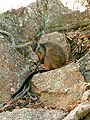
붓꼬리바위왈라비

눈표범

동방독수리


종 식별 – 카테고리 Ib
종을 식별하기 위해 분자 유전 기술을 사용하는 것은 여러 가지 이유로 유용할 수 있다.야생에서의 종 식별은 개체수 범위나 부지 점유율, 교배율, 병원균과 침습종의 출현과 확산을 감지하는 데 사용될 수 있다.개체군의 변화는[8] 이베리아 스라소니와 [9]울버린에 대해 조사되었고, 웨스트슬로프 커트스로트 송어의 모니터링은 도입된 무지개[10] 송어와 광범위하게 교배하고 있는 것을 보여주고 있으며,[11][12] 캐나다 스라소니와 밥캣 잡종이 현재 개체군의 남쪽 주변부에서 발견되었습니다.병원균의 출현과 확산은 진단 분자 분석을 사용하여 추적할 수 있습니다. 예를 들어, 감염의[13] 가능한 지리적 기원을 식별하기 위해 미국 동부에 있는 모기들 사이의 웨스트 나일 바이러스의 확산을 식별하고, 큰뿔 [14]양들의 기생충 감수성과 관련된 유전자 위치를 식별하는 것입니다.침입이 종종 토착 종의 생태와 범위에 영향을 미치고 교배 위험을 초래할 수 있기 때문에 침입 종의 유전자 모니터링은 보존과 경제적 관심사이다(예: 요각류,[15] 오리,[16] 올빼미와 얼룩부엉이,[17] 레셉시안 래빗피쉬[18]).

이베리아 스라소니

울버린
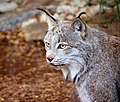
캐나다 스라소니
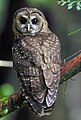
얼룩올빼미


종 식별은 도살되거나 분쇄된 제품의 전통적인 시각적 식별이 어렵거나 [19]불가능한 어업 및 야생동물 거래를 모니터링하는 데에도 상당한 유용성이 있다.보존에 관심이 있는 종의 거래 및 소비 감시는 분자 증폭 및 시장에서 얻은 육류 또는 어류의 식별을 사용하여 수행할 수 있다.예를 들어,[20] 유전자 시장 조사는 시장에 출현하는 고래(예: 북태평양 밍크 고래)와 돌고래 종의 보호종과 개체수를 식별하기 위해 사용되었다.시장거래에 대한 다른 조사들은 피니피드,[21] 해마[22], [23]상어에 초점을 맞추고 있다.이러한 조사는 시장을 통해 수산물과 야생동물의 양과 이동을 지속적으로 모니터링하고 밀렵이나 기타 불법, 미신고 또는 규제(IUU) 착취(예: IUU 어업)를 탐지하는 데 사용됩니다.
초기 어플리케이션은 종의 식별과 개체군 평가에 초점을 맞췄지만 시장조사는 포획-재캡처, 할당 테스트 및 개체군 [19]모델링을 포함한 다양한 분자 생태학적 조사 기회도 제공한다.이러한 개발은 잠재적으로 유전자 모니터링 범주 II와 관련이 있다.

말린 해마
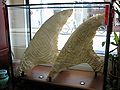
상어지느러미


모집단 유전자 파라미터 모니터링– 카테고리 II
유전자적 수단을 통한 개체수 변화 감시는 박물관에서 보관된 종에서 발견된 '역사적' DNA의 분석과 그 종의 현대 DNA와의 비교를 통해 소급하여 이루어질 수 있다.또한 현재 모집단의 상태와 지속성의 지속적인 변화를 평가하기 위한 도구로 사용될 수 있다.상대적 모집단 변화의 유전적 척도에는 다양성의 변화(예: 이형 접합성과 대립 유전자의 풍부성)가 포함된다.상대가 인구 변화의 이 통계를 통해 모니터링하면 소급이 수행되었다를 맞습니다 bison,[24]갈라파고스 tortoise,[25]houting,[26]대서양 salmon,[27]북부 pike,[28]뉴질랜드 snapper,[29]무지개 송어 trout,[30]더 큰 프레리 chicken,[31일]모리셔스 kestrel[32]와 헥터의 dolphin[33]하고 있는 과목을 많이 사용한다. 덴마크어와 S포함한 상시적 연구,Wedish 갈색 송어 수.[34][35]반면 모집단 사이에 유전자 유동 양식의 변화 또한 대립 유전자 주파수 베트의 차이 판단에 의해 감시될 수 있는 절대 인구 변화 측정(예를 들어 유효 집단 크기(로마))주파수 대립 유전자나 연관 불균형의 수준 시간('LDNe의)에('Ftemporal')인구의 변화 측정함으로, 수행할 수 있다.개체 수 시간이 지남에 따라Ween.그러한 연구의 주제들이 희뜩희뜩 bears,[3][36][37]cod,[38] 빨간 deer,[39]레오파드 frogs[40]고 배럴 의료진을 포함한다.[41][42]
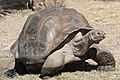
갈라파고스거북

대서양 연어

헥토르돌고래

북표범개구리


유전자 모니터링은 적응적으로 선택된 마커 빈도의 변화를 통해 환경 변화를 모니터링하는 연구에서도 점점 더 많이 사용되어 왔다.예를 들어, 유전적으로 제어된 피처-식물 모기(Wyeomyia smithii)의 광주기적 반응(잠자는 시간)은 따뜻한 [43]날씨로 인해 피처 식물들의 긴 성장기에 대응하여 변화했다.12세대 동안 대조적인 환경에서 자란 실험 밀 개체군은 개화 시간의 변화가 한 유전자의 조절 변화와 밀접하게 연관되어 있다는 것을 발견했고,[44][45] 이는 식물의 기후 변화에 대한 유전적 적응 경로를 암시한다.
유전자 모니터링은 또한 소규모 이주 인구의 지속적인 건강 상태를 모니터링하는 데 유용하다.이것의 좋은 예가 뉴질랜드 새들에게서 발견되는데, 뉴질랜드 새들은 지난 세기에 서식지의 파괴와 수많은 포유류의 포식자들의 출현에 의해 큰 영향을 받았고 최근 소수의 '창시자' 개인을 포식자가 없는 연안 "생태" 섬으로 이전하는 프로그램의 일부가 되었다.예를 들어 블랙 [46]로빈과 카카포.[47]

배럴 메디크
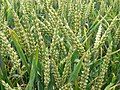
보통밀

피처풀모기

카카포 – 뉴질랜드 밤앵무새


과학에서의 유전자 모니터링 현황
2007년 2월 UCLA 환경연구소에서 '인간의 변화된 환경의 진화적 변화:과학을 정책으로 바꾸기 위한 국제 정상 회의.이에[48] 따라 (i)서식지 교란과 기후변화 (ii)착취와 포획 번식 (iii)침습종과 병원균의 세 가지 주요 범주로 유전적 영향에 대한 우리의 이해를 중심으로 조직된 분자생태학 저널의 특별호가 발행되었다.
2007년에는 NCEAS와[49] NESCent의[50] 공동 지원을 받아 유전자 모니터링 작업 그룹이 출범하여 관련 기술을 더욱 개발하고 정책 입안자와 [51]관리자에게 일반적인 모니터링 지침을 제공한다.
현재 이 주제는 McComb 등(2010년)과 Allendorf 등(2013년)을 포함한 여러 유명한 교과서에서 다루고 있다.
천연자원 기관의 유전자 모니터링
많은 천연자원 기관은 유전자 감시를 물고기와 야생동물의 개체 수를 감시하는 비용 효율적이고 방어 가능한 방법으로 보고 있습니다.미국 지질조사국(US Geology [52]Survey), 미국 산림국(USDA), 국립공원국(National Park Service), 그리고 국립해양수산국(National Marine Fisure Service)의 과학자들이 유전자 감시를 사용하는 새로운 방법과 도구를 개발하고 있으며, 이러한 도구를 광범위한 지리적 [2][36]척도에 적용하고 있다.현재 USFWS는 모니터링에 유전자 도구를 사용하는 최선의 방법을 관리자에게 알려주는 웹사이트를 운영하고 있습니다(아래 참조).
「 」를 참조해 주세요.
레퍼런스
- ^ 생물다양성협약 홈페이지
- ^ a b c Schwartz, M.K.; et al. (2007). "Genetic monitoring as a promising tool for conservation and management" (PDF). Trends Ecol. Evol. 22 (1): 25–33. doi:10.1016/j.tree.2006.08.009. PMID 16962204.
- ^ a b Boulanger, J.; et al. (2004). "Monitoring of grizzly bear population trends and demography using DNA mark-recapture methods in the Owikeno Lake area of British Columbia". Canadian Journal of Zoology. 82 (8): 1267–1277. doi:10.1139/Z04-100.
- ^ Piggott, M.P.; et al. (2006). "Estimating population size of endangered Brush-tailed Rock-wallaby (Petrogale penicillata) colonies using faecal DNA". Mol. Ecol. 15 (1): 81–91. doi:10.1111/j.1365-294X.2005.02783.x. PMID 16367832. S2CID 9147442.
- ^ Bhagavatula, J.; Singh, L. (2006). "Genotyping faecal samples of Bengal tiger Panthera tigris tigris for population estimation: A pilot study". BMC Genet. 7: 48. doi:10.1186/1471-2156-7-48. PMC 1636336. PMID 17044939.
- ^ Jaňecka, J.E.; et al. (2008). "Population monitoring of snow leopards using noninvasive collection of scat samples: a pilot study". Animal Conservation. 11 (5): 401–411. doi:10.1111/j.1469-1795.2008.00195.x. S2CID 20787622.
- ^ Rudnick, J.A.; et al. (2005). "Using naturally shed feathers for individual identification, genetic parentage analyses, and population monitoring in an endangered Eastern imperial eagle (Aquila heliaca) population from Kazakhstan". Mol. Ecol. 14 (10): 2959–2967. doi:10.1111/j.1365-294X.2005.02641.x. PMID 16101766. S2CID 14165843.
- ^ Fernández, N.; et al. (2006). "Landscape evaluation in conservation: molecular sampling and habitat modeling for the Iberian lynx". Ecol. Appl. 16 (3): 1037–1049. doi:10.1890/1051-0761(2006)016[1037:LEICMS]2.0.CO;2. hdl:10261/50325. PMID 16827001.
- ^ Schwartz, M.K.; et al. (2007). "Inferring geographical isolation of wolverines in California using historical DNA" (PDF). J. Wildl. Manage. 71 (7): 2170–2179. doi:10.2193/2007-026. S2CID 35396299.
- ^ Hitt, N.P.; et al. (2003). "Spread of hybridization between native westslope cutthroat trout, Oncorhynchus clarki lewisi, and nonnative rainbow trout, Oncorhynchus mykiss". Can. J. Fish. Aquat. Sci. 60 (12): 1440–1451. doi:10.1139/F03-125.
- ^ Homyack, J.A.; et al. (2008). "Canada lynx-bobcat (Lynx canadensis x L.rufus) hybrids at the southern periphery of lynx range in Maine, Minnesota and New Brunswick" (PDF). Am. Midl. Nat. 159: 504–508. doi:10.1674/0003-0031(2008)159[504:CLLCLR]2.0.CO;2. S2CID 85843341.
- ^ Schwartz, M.K.; et al. (2004). "Hybridization between Canada lynx and bobcats: Genetic results and management implications" (PDF). Conserv. Genet. 5 (3): 349–355. doi:10.1023/B:COGE.0000031141.47148.8b. S2CID 16786563.
- ^ Kilpatrick, A.M.; et al. (2006). "West Nile Virus epidemics in North America are driven by shifts in mosquito feeding behavior". PLOS Biol. 4 (4): 606–610. doi:10.1371/journal.pbio.0040082. PMC 1382011. PMID 16494532.
- ^ Luikart, G.; et al. (2008). "Candidate gene microsatellite variation is associated with parasitism in wild bighorn sheep" (PDF). Biol. Lett. 4 (2): 228–231. doi:10.1098/rsbl.2007.0633. PMC 2429941. PMID 18270161.
- ^ Lee, C.E. (1999). "Rapid and repeated invasions of fresh water by the copepod Eurytemora affinis" (PDF). Evolution. 53 (5): 1423–1434. doi:10.1111/j.1558-5646.1999.tb05407.x. PMID 28565555. S2CID 205781444.
- ^ Seyoum, S; Tringali, MD; Bielefeld, RR; Feddersen, JC; Benedict Jr, RJ; Fanning, AT; Barthel, B; Curtis, C; Puchulutegui, C; Roberts, ACM; Villanova Jr, VL; Tucker, EC (2012). "Fifty-nine microsatellite markers for hybrid classification studies involving endemic Florida Mottled Duck (Anas fulvigula fulvigula) and invasive Mallards (A. platyrhynchos)". Conservation Genetics Resources. 4 (3): 681–687. doi:10.1007/s12686-012-9622-9. S2CID 16072813.
- ^ Haig, S.M.; et al. (2004). "Genetic identification of spotted owls, barred owls and their hybrids: legal implications of hybrid identity". Conserv. Biol. 18 (5): 1347–1357. doi:10.1111/j.1523-1739.2004.00206.x. S2CID 43989899.
- ^ Azzurro, E.; et al. (2006). "Genetics of the early stages of invasion of the Lessepsian rabbitfish Siganus luridus" (PDF). J. Exp. Mar. Biol. Ecol. 333 (2): 190–201. doi:10.1016/j.jembe.2005.12.002. Archived from the original (PDF) on 2011-07-16. Retrieved 2009-04-01.
- ^ a b c Baker, C.S. (2008). "A truer measure of the market: the molecular ecology of fisheries and wildlife trade". Mol. Ecol. 17 (18): 3985–3998. doi:10.1111/j.1365-294X.2008.03867.x. PMID 18643915.
- ^ Baker, C.S.; et al. (2007). "Estimating the number of whales entering trade using DNA profiling and capture-recapture analysis of market products". Mol. Ecol. 16 (13): 2617–2626. doi:10.1111/j.1365-294X.2007.03317.x. PMID 17594434. S2CID 25938493.
- ^ Malik, S.; et al. (1997). "Pinniped penises in trade: a molecular genetic investigation". Conserv. Biol. 11 (6): 1365–1374. doi:10.1046/j.1523-1739.1997.96125.x. S2CID 86541791.
- ^ Sanders, J.G.; et al. (2008). "The tip of the tail: molecular identification of seahorses for sale in apothecary shops and curio stores in California". Conserv. Genet. 9: 65–71. doi:10.1007/s10592-007-9308-0. S2CID 15874239.
- ^ Clarke, S.C.; et al. (2006). "Identification of shark species composition and proportion in the Hong Kong shark fin market based on molecular genetics and trade records". Conserv. Biol. 20 (1): 201–211. doi:10.1111/j.1523-1739.2005.00247.x. PMID 16909673. S2CID 26719257.
- ^ Shapiro, B.; et al. (2004). "Rise and fall of the Beringian Steppe Bison". Science. 306 (5701): 1561–1565. Bibcode:2004Sci...306.1561S. doi:10.1126/science.1101074. PMID 15567864. S2CID 27134675.
- ^ Poulakakis, N.; et al. (2008). "Historical DNA analysis reveals living descendants of an extinct species of Galápagos tortoise" (PDF). Proc. Natl. Acad. Sci. USA. 105 (40): 15464–15469. doi:10.1073/pnas.0805340105. PMC 2563078. PMID 18809928.
- ^ Hansen, M.M.; et al. (2006). "Underwater but not out of sight: genetic monitoring of effective population size in the endangered North Sea houting (Coregonus oxyrhynchus)". Can. J. Fish. Aquat. Sci. 63 (4): 780–787. doi:10.1139/F05-260.
- ^ Nielsen, E.E.; et al. (1999). "Genetic variation in time and space: Microsatellite analysis of extinct and extant populations of Atlantic salmon". Evolution. 53 (1): 261–268. doi:10.1111/j.1558-5646.1999.tb05351.x. PMID 28565198.
- ^ Miller, L.M.; Kapuscinski, A.R. (1997). "Historical analysis of genetic variation reveals low effective population size in a northern pike (Esox lucius) population" (PDF). Genetics. 147 (3): 1249–1258. doi:10.1093/genetics/147.3.1249. PMC 1208248. PMID 9383067.
- ^ Hauser, L.; et al. (2002). "Loss of microsatellite diversity and low effective population size in an overexploited population of New Zealand snapper (Pagrus auratus)". Proc. Natl. Acad. Sci. USA. 99 (18): 11742–11747. Bibcode:2002PNAS...9911742H. doi:10.1073/pnas.172242899. PMC 129339. PMID 12185245.
- ^ Heath, D.D.; et al. (2002). "Temporal change in genetic structure and effective population size in steelhead trout (Oncorhynchus mykiss)". Mol. Ecol. 11 (2): 197–214. doi:10.1046/j.1365-294X.2002.01434.x. PMID 11856422. S2CID 23598245.
- ^ Bellinger, M.R. (2003). "Loss of genetic variation in greater prairie chickens following a population bottleneck in Wisconsin, USA". Conserv. Biol. 17 (3): 717–724. doi:10.1046/j.1523-1739.2003.01581.x. S2CID 4988537.
- ^ Groombridge, J.J.; et al. (2000). "'Ghost' alleles of the Mauritius kestrel". Nature. 403 (6770): 616. doi:10.1038/35001148. PMID 10688188. S2CID 4336347.
- ^ Pichler, F.B.; Baker, C.S. (2000). "Loss of genetic diversity in the endemic Hector's dolphin due to fisheries-related mortality". Proc. R. Soc. Lond. B. 267 (1438): 97–102. doi:10.1098/rspb.2000.0972. PMC 1690489. PMID 10670959.
- ^ Østergaard, S.; et al. (2003). "Long-term temporal changes of genetic composition in brown trout (Salmo trutta L.) populations inhabiting an unstable environment". Mol. Ecol. 12 (11): 3123–3135. doi:10.1046/j.1365-294X.2003.01976.x. PMID 14629391. S2CID 44258175.
- ^ Palm, S.; et al. (2003). "Effective population size and temporal genetic change in stream resident brown trout (Salmo trutta, L.)". Conserv. Genet. 4 (3): 249–264. doi:10.1023/A:1024064913094. S2CID 22607075.
- ^ a b Kendall, K.C.; et al. (2009). "Demography and genetic structure of a recovering grizzly bear population". J. Wildl. Manage. 73: 3–17. doi:10.2193/2008-330. S2CID 52249993.
- ^ Proctor, M.F.; et al. (2005). "Genetic analysis reveals demographic fragmentation of grizzly bears yielding vulnerably small populations". Proc. R. Soc. Lond. B. 272 (1579): 2409–2416. doi:10.1098/rspb.2005.3246. PMC 1559960. PMID 16243699.
- ^ Poulsen, N.A.; et al. (2006). "Long-term stability and effective population size in North Sea and Baltic Sea cod (Gadus morhua)". Mol. Ecol. 15 (2): 321–331. doi:10.1111/j.1365-294X.2005.02777.x. PMID 16448403. S2CID 20349824.
- ^ Nussey, D.H.; et al. (2005). "Rapidly declining fine-scale spatial genetic structure in female red deer" (PDF). Mol. Ecol. 14 (11): 3395–3405. doi:10.1111/j.1365-294X.2005.02692.x. PMID 16156811. S2CID 28250600. Archived from the original (PDF) on 2016-03-03. Retrieved 2009-04-01.
- ^ Hoffman, E.A.; Blouin, M.S. (2004). "Historical data refute recent range contraction as cause of low genetic diversity in isolated frog populations" (PDF). Mol. Ecol. 13 (2): 271–276. doi:10.1046/j.1365-294X.2003.02057.x. PMID 14717886. S2CID 12815666. Archived from the original (PDF) on 2010-06-03. Retrieved 2021-06-12.
- ^ Bonnin, I.; et al. (2001). "Spatial effects and rare outcrossing events in Medicago truncatula (Fabaceae)". Mol. Ecol. 10 (6): 1371–1383. doi:10.1046/j.1365-294X.2001.01278.x. PMID 11412361. S2CID 23585208.
- ^ Siol, M.; et al. (2007). "Effective population size associated with self-fertilization: lessons from temporal changes in allele frequencies in the selfing annual Medicago truncatula". J. Evol. Biol. 20 (6): 2349–2360. doi:10.1111/j.1420-9101.2007.01409.x. PMID 17956396.
- ^ Bradshaw, W.E.; Holzapfel, C.M. (2001). "Genetic shift in photoperiodic response correlated with global warming". Proc. Natl. Acad. Sci. USA. 98 (25): 14509–14511. doi:10.1073/pnas.241391498. PMC 64712. PMID 11698659.
- ^ Rhoné, B.; et al. (2008). "Insight into the genetic bases of climatic adaptation in experimentally evolving wheat populations". Mol. Ecol. 17 (3): 930–943. doi:10.1111/j.1365-294X.2007.03619.x. PMID 18194164. S2CID 7810825.
- ^ Strasburg, J.L.; Gross, B.L. (2008). "Adapting to winter in wheat: a long-term study follows parallel phenotypic and genetic changes in three experimental wheat populations". Mol. Ecol. 17 (3): 716–718. doi:10.1111/j.1365-294X.2007.03639.x. PMID 18194165.
- ^ Ardern, S.L.; Lambert, D.M. (1997). "Is the black robin in genetic peril?". Mol. Ecol. 6 (1): 21–28. doi:10.1046/j.1365-294X.1997.00147.x. S2CID 84475847.
- ^ Miller, H.C.; et al. (2003). "Minisatellite DNA profiling detects lineages and parentage in endangered kakapo (Strigops habroptilus) despite low microsatellite DNA variation". Conserv. Genet. 4 (3): 265–274. doi:10.1023/A:1024037601708. S2CID 8877634.
- ^ 인간변화환경의 진화적 변화에 관한 국제정상회의의 결과와 제언에 관한 연구
- ^ 국립생태분석종합센터
- ^ 국립진화합성센터
- ^ "Genetic Monitoring: Development of Tools for Conservation and Management". Archived from the original on 2009-06-15. Retrieved 2009-04-01.
- ^ 록키 마운틴 연구소 야생 생물 유전 연구소
외부 링크
- 관리자를 위한 유전자 모니터링
- 몬태나 북서부 그리즐리 베어 과학 중심 보고서[영구 데드링크]
- 뉴사이언티스트 기사– 눈표범의 숫자를 읽을 수 있습니다.
- 동물의 스캣은 과학자의 보물입니다.DNA 테스트의 발전으로 야생 생물학자들은 그들이 남긴 것을 이용하여 생물들을 연구할 수 있게 되었다.
- 포스트 가제트 뉴스:조류연구원은 이글스가 더 자세히 관찰해야 한다는 것을 발견했다.
- 새로운 과학자 - 숨겨진 개체군이 링스에게 싸울 기회를 주다
- SFGate: 맞아요 – Tahoe 근처에서 울버린이 번성하고 있습니다.
- AP통신: 보호 송어가 스스로 멸종으로 번식을 하고 있습니다.
- 따뜻한 기후에 적응: 보라색 물떼새 식물 모기


