다포목
Polyporales| 다포목 | |
|---|---|
 | |
| 가노데르마속 | |
과학적 분류  | |
| 킹덤: | 곰팡이 |
| 구분: | 바시디오미코타 |
| 클래스: | 아가리코미케스목 |
| 하위 클래스: | 인서테아 세디스 |
| 순서: | 다포목 가음. (1926년) |
| 가족들 | |
| 키스토스테레아과 | |
| 동의어[2] | |
폴리포라목(Polyporales)은 바시디오미코타 분단의 약 1800종의 균류종이다.순서는 (전부는 아니지만) 일부 다포체와 많은 코르티시오이드 균류, 몇 가지 한증류(주로 렌티누스속)를 포함한다.그 주문에 속하는 많은 종들은 사프로테리아 종이며, 그들 대부분은 나무 로터리를 한다.가노데르마와 포메스와 같은 일부 제네랄에는 살아있는 조직을 공격한 다음 죽은 숙주의 목재를 계속 떨어뜨리는 종들이 포함되어 있다.경제적 중요성에는 산림과 어메니티 나무의 몇 가지 중요한 병원균과 구조재목의 부패로 피해를 주는 몇 가지 종들이 포함된다.일부 폴리포랄레스는 상업적으로 재배되어 식품이나 전통 한방용으로 판매되고 있다.
분류학
역사
이 명령은 원래 1926년 스위스 균류학자 에른스트 알베르 게우만(Ernst Albert Geumann)에 의해 제안된 것으로, 바지디오카르(과일체)를 생산하는 망막 안에 있는 종을 수용하는 것으로 체내성 발달 모드(외부의 포자성 표면을 형성함)를 보여준다.이와 같이 순서는 브라키바시디아과, 코르티치아과, 클라바리아과, 시펠리아과, 딕티올라과, 푸르툴리누아과, 라둘라과, 툴라셀라과, 클라바리오균의 혼합을 나타내는 10개 과가 포함되었다.[5]
E.J.H.코너(E.J.H. Corner)는 1932년 일련의 간행물에서 폴리포레 균류의 과실체에서 여러 종류의 히패가 발생했다고 설명했다.그는 나중에 폴리포어 분류학에서 근본적인 성격이 되는 히팔분석의 개념을 도입했다.[6][7][8]
폴리포랄레스는 게우만의 동시대인들에 의해 널리 채택되지 않았다; 대부분의 미생물학자들과 참고서적 작품들은 폴리포레스와 다른 "비농균류"를 위해 모든 인공적인 순서의 Aphyllophorales를 사용하는 것을 선호한다.1980년대와 1990년대에 좀 더 자연스럽고 형태학에 기초한 균류 분류를 도입하려는 시도가 있었을 때, 그 질서는 여전히 간과되었다.1995년 기준 연구에서는 대부분의 폴리포레스와 코르티시오이드 균을 가노데르마탈레스, 포리아알레스, 스테레오알레스에 배치하였다.[9]
현재 상태
| |||||||||||||||||||||||||||||||||||||||||||||||||||||||||||||||||||||||||||||||||||||||||||||||||||||||||||||||||||||||||||||||||||||||
| Justo 외 2017에서 인정된 가족(볼드됨) 및 가족("/"로 미리 작성됨)에 대한 단순화된 계발학적 개요.(*)로 표시된 가정이 새로 만들어졌다.[10] |
DNA 염기서열의 피복재 분석에 기초한 분자 연구는 폴리포라목(일명 폴리포라목이라고도 한다)을 부활시키고 재정의했다.[11][12][13]rRNA 유전자 시퀀스, 단복사 단백질 부호화 유전자, 게놈 기반 계통 유전자 분석의 조합을 이용한 연구는 폴리포르탈레스가 단핵 집단임을 밝혀냈다.[13][16][10]그들은 아가리코미케테스 계급의 일원이지만 하위 계급에 배정되지는 않았다.[17]순서와 그 구성과의 정확한 경계는 아직 해결되지 않았지만, 폴리포라과에는 포미탑시디과와 메리필라과에서 추가 종을 가지고 있는 폴리포레과의 핵심 집단을 유지하고 있다.또한 기존에 그들 고유의 별개의 순서인 가노더마테스목(Ganodermatales)에 배속되었던 가노더마테스과의 폴리포레도 그 특징적인 기저동물 형태학에 기초하여 포함한다.스파라시디아과에서 콜리플라워 균류처럼 키스토스테레아과, 메룰리아과, 파네로차에테과, 제나스마과 등에 속하는 코르티시오이드 균류도 포함된다.[18]
광범위한 분자 분석에서 맨프레드 바인더와 동료들은 373종의 6개의 유전자를 분석하여 이전에 인정된 폴리포라목의 4개의 선인 안티로디아, 코어 폴리포라이드, 플레바이오이드, 잔류 폴리포라목의 존재를 확인했다.[13]이 작업을 연장하면서 알프레도 저스토와 동료들은 새로운 가족 수준의 분류를 포함하는 폴리포랄레스의 계통학적 개요를 제안했다.그들은 18개의 성패와 4개의 비공식적인 순위 없는 성패에 성을 할당했다.그 가족은 아래에 나열되어 있고, 그 다음에 분류 당국과 발행 연도가 있다.[10]
- 파네로차에타과 (1981년)
- 이르피카과 스피린 & 지미트르.(2003)
- 메룰리아과 레아(1922년)
- 스테케리나과 파르마스토(1968년)
- 세레나과 미에티넨, 저스토&히베트(2017년)
- 파나과 미에티넨, 저스토&히베트(2017년)
- 히포데르마테아과 줄리치(1981)
- 메리필라과 줄리치(1981)
- 포도시파과리드(1965)
- 폴리포라과 코르다(1939년)
- 포미탑시디과 (1981년)
- 라에티포라과 줄리치(1981)
- 데이크료볼라과 줄리치(1981)
- 쥘리치과 (1981년)
- 그리폴라과 줄리치(1981)
- 겔라토포리아과 미에티넨, 저스토&히베트(2017년)
- 인크루스토포리아과 줄리치(1981)
- 이스치노데르마타과 (1981년)
폴리포랄레스에 속하지만 분자 확인이 없거나 부족한 다른 가족으로는 디아찬토다과 줄리히(1981); 프레이질리포리아과 Y.C가 있다.다이, B.K.Cui & C.L.자오(2015);히메노그램마과 줄리히(1981)와 파에오트라메타과 포포프 ex Piettek(2005)이다.[10]이전에 폴리포라목(Polyporales)에 위치했던 니그로포미타과는 히메노차테목(Hymenochaetales) 내에 뚜렷한 혈통으로서 내포되어 있는 것으로 나타났다.[19]
스테케리니아과는 대부분의 종과 안트로디아엘라, 융후니아, 스테케리눔과, 파네로차에테과, 폴리포라과, 메룰리아과에서 전통적으로 분류되었던 12종의 다른 하이드로이드와 포로로이드 제네라를 포함하도록 2012년에 다시 정의되었다.[15]2016-17년에 스테케리니아과에 몇 개의 새로운 성종이 추가되었다.[20][21]
생태학
이 순서는 국제적이고 세계적으로 알려진 균류의 약 1.5%인 약 1800종의 균류를 포함하고 있다.[10]폴리포라목의 모든 종은 사프로트로피족이며, 대부분은 나무로 회전한다.따라서 그들의 과일 몸체는 일반적으로 살아있는 나무나 빈사나무, 죽은 부착된 나무나 떨어진 나무에서 발견된다.땅에서 열매를 맺는 폴리포라목 종은 라티포루스 신시나토스, 그리폴라 프론도사 같은 뿌리 썩은 종이거나 폴리포루스 라디카투스, P. 멜라노푸스 같은 기질 조각으로 인해 열매를 맺는다.[22]
목재 데케이 폴리포라일은 숲에서 죽은 나무의 부피를 감소시키며 탄소 순환의 중요한 구성 요소다.[13]나무는 주로 리닌, 셀룰로오스, 헤미셀룰로오스 세 종류의 조직으로 구성되어 있다.폴리포랄레스의 백색 썩은 종은 부패에 강한 폴리머 리그닌의 효율적인 분해자로, 부분적으로 분해된 셀룰로오스를 잔류물로 남긴다.[13]갈색 썩은 종은 셀룰로오스 섬유소를 분해하여 부서지기 쉬운 갈색 리닌 잔류물을 남긴다.혹과 같은 갈색 회전 잔여물은 수백 년 동안 토양에 남아 있을 수 있어 반복과 수분 보유 능력이 증가한다.[23]
리닌 과록시디제, 망간 과록시디제, 다용도 과록시디제 등 리닌을 저하시키는 과록시디제 효소는 폴리포라목의 모든 백로단원에 존재하지만 갈색 로트종에는 없다.[16][24][25]포도당-메탄올-콜린 산화효소 계열의 구성원을 포함한 산화효소는 식물성 중합체의 분해에 핵심적인 역할을 하는데, 이는 백로트와 갈색로트 붕괴 모두에서 궁극적인 산화제 역할을 하는 과산화수소를 발생시키기 때문이다.[26]
다달레아 퀘르시나와 포미탑시스 피니콜라라는 두 종류의 폴리포라목에서, 그들의 과일 몸체를 먹고 사는 네마토드를 파괴하고 식민지화하기 위해 마비되는 독소를 사용한다.[27]
중요도
.jpg)

일반 품종인 포름, 포미탑시스, 가노데르마에 있는 많은 목재 데케이 균류는 병원성으로, 살아 있는 나무의 엉덩이와 뿌리 썩음을 유발하고 그에 따른 임업 농장의 손실을 초래한다.지뢰 균인 피브로포리아바일란티와 같은 몇 가지 종은 썩어 구조적인 목재를 손상시킬 수 있다.[28]
특히 폴리포랄레스의 몇 가지, 특히 가노데르마(ling-zhi), 그리폴라 프론도사([29]maippola frontdosa, maitoka), 대만포풍구스(niu zhang zhi),[30] 리그노수스 코네로티스([31]rametes versicolor, yun-zhi)는 상업적으로 재배되고 중국 전통 의학에 쓰이기 위해 판매되고 있다.[32]폴리포레 라에티포루스술루루스, 포메프타리우스, 포미탑시스피니콜라, 포미탑시스 베툴리나, 라리시폼 오스테리니스 등은 유럽의 중부 민간 의학에서 다양한 질병의 치료를 위해 널리 사용되어 왔다.[33]
라에티포루스(Laetiporus)와 스파라시스(Sparasis)의 여러 종을 포함한 일부 종은 식용으로 사용된다.[34]블랙펠로우의 빵, 즉 라코페팔룸 멜리테는 호주 원주민들이 소중히 여기는 먹을 수 있는 음식이다.[35]렌티누스 오징어는 아시아와 아프리카 공동체에서 수집되어 먹는다.[36]
포미탑시스 베툴리나는 이전에 숯 크레용 제조에 사용되었다.[37]아마두(Amadou)는 포메타리우스의 과일 본체에서 유래한 해면성 물질로 고대부터 틴더로 사용되어 왔다.더 최근에는 치과의사들에 의해 스티커로, 또는 모자나 다른 물품들을 만드는 펠트 같은 재료로 사용되어 왔다.[38]하플로포루스 오도로스의 아나이스 향이 나는 과일 주체는 평원 인디언의 일부 부족들이 신성한 물건의 구성 요소로 사용하였다.라리시폼 오피셜리스는 19세기 태평양 북서쪽 무당들에 의해 영혼의 형상을 조각하는 데 사용되었다.[39]버섯염색에는 다이어의 폴리포레(Phaeolus Schweinitzi)와 보라색 염료 폴리포레(Hapalopilus nidulans)를 포함한 몇몇 종들이 사용된다.[40]
서열화된 게놈
그 Polyporales의 몇몇 멤버들은 그들의 게놈, 또는 목재 썩음의 Ganoderma lucidum,[41]Lignosus rhinocerotis,[42]Dichomitus squalens,[16]Fomitopsis pinicola,[16]Tr을 포함한 신진 대사 경로, 해명하는 것을 효소 생리 활성 화합물의 합성에 관여한 생산을 위해서 유전적 근거 이해하도록 도와 줄 배열을 가지고 있다.ametes versicolor,[16] 그리고 울피포리아 코코아.[16]염기서열의 두 가지 곰팡이인 파네로차테 번시스포륨과 [43]포스티아 태반은 각각 백색 부패와 갈색 부패의 메커니즘을 연구하는 연구자들의 모델종 역할을 한다.[44][45][46]2017년[update] 현재 46개의 폴리포랄레스 게놈 서열이 있으며, 이는 전체 서열 진균 게놈의 약 7%에 해당한다.[10]
화석 기록
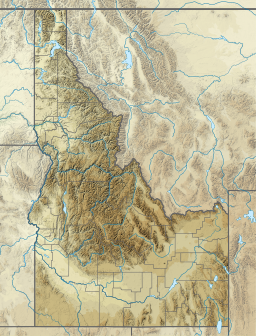
1940년 아이다호에서 3차(66–2.6 Ma)에 이르는 포메스 종의 화석화된 과일 주체가 보고되었다.[47]가노데르미테스 리비쿠스의 화석 과일 주체가 리비아 사막의 얼리 미오세네(23–2.6 Ma)로부터 보고되었다.이 표본은 폴리포랄레스에게 가장 빨리 설득력 있는 화석 증거다.[48]
분자시계 기법은 폴리포랄레스의 나이를 추정하는 데 사용되어 왔으며, 그 질서가 쥬라기 말기,[14] 약 203–250 Ma 또는 보다 최근의 연구에서 약 114 Ma의 기간에 진화되었음을 시사한다.[49]
제네라인케르타에세디스
폴리포랄레스에는 여러 가지 이유로 특정 가족에 배정되지 않은 여러 가지 제네랄이 분류되어 있다.그들은 가족 배치와 관련하여 근친상간 세디스를 가지고 있다.일부는 잘 알려져 있지 않거나 DNA 계통학 연구에 포함되지 않을 수 있으며, 또는 그러한 연구를 했을 때 명명된 어떤 가족과 명확하게 그룹화되지 않았을 수 있다(일부 경우에는 배치의 명확화보다는 새로운 가족을 만들어야 한다.여기에는 다음이 포함된다.
- 이지스 고메즈 몬토야, 라지첸브.& 로블레도 (2017년)[50]
- 안토폴리야 카라시스키 & 니에멜레(2016년)[51]
- 부르도티엘라 뒤헴 & 슐테이스(2011년)[52]
- 크러코돈티아 호르츠탐 & 라이바르덴(2005)[53]
- 결정체질소 (Rick) 릭 (1940)
- 돈키오포리오엘라 L.W.저우 (2016년)[54]
- 글로보소미세스 율리히(1980년)[55]
- Globuliciopsis Hjortstam & Ryvarden(2004)[56]
- 이르피코차에테 릭(1940)[57]
- 메룰리오프하나두헴&부크(2011년)[58]
- 니그로하이드넘 라이바르덴 (1987년)[59]
- Phaeoplebiopsis D.플루다스 & 히베트 (2015년)[25]
- 팔레비엘라 P.카르스트 (1890년)[60]
- 레페토바시디옵시스 Dingra & Avn.P.싱(2008)[61]
- Rickiopora Westphalen, Tomshovský & Rajchenb.(2016)[62]
- 타이완어풍구스 성 H.우, Z.H.Y.C.다이앤씨에이치수(2004)[63]

-1.jpg)


참조
- ^ Zhao, Chang-Lin; Cui, Bao-Kai; Song, Jie; Dai, Yu-Cheng (2015). "Fragiliporiaceae, a new family of Polyporales (Basidiomycota)". Fungal Diversity. 70 (1): 115–126. doi:10.1007/s13225-014-0299-0. S2CID 7252657.
- ^ "Trametales Boidin". MycoBank. International Mycological Association. Retrieved 2016-10-16.
- ^ Rea, Carleton (1922). "British Basidiomycetae: A Handbook to the Larger British Fungi". Nature. 111 (2781): 574. Bibcode:1923Natur.111..213B. doi:10.1038/111213a0. S2CID 4123814.
- ^ Boidin, J.; Mugnier, J.; Canales, R. (1998). "Taxonomie moleculaire des Aphyllophorales". Mycotaxon (in French). 66: 445–491 (see p. 487).
- ^ Gäumann, E. (1926). "Vergleichende Morphologie der Pilze". Nature. 117 (2954): 820. Bibcode:1926Natur.117..820.. doi:10.1038/117820a0. S2CID 4096339.
- ^ Corner E.J.H. (1932). "The fruit-body of Polystictus xanthopus, Fr". Annals of Botany. 46 (1): 71–111. doi:10.1093/oxfordjournals.aob.a090319. JSTOR 43237358.
- ^ Corner E.J.H. (1932). "A Fomes with two systems of hyphae". Transactions of the British Mycological Society. 17 (1–2): 51–81. doi:10.1016/s0007-1536(32)80026-4.
- ^ Corner E.J.H. (1932). "The identification of the brown-root fungus". The Gardens' Bulletin; Straits Settlements. 5: 317–350.
- ^ Hawksworth DL, Kirk PM, Sutton BC, Pegler DN, eds. (1995). Dictionary of the Fungi (8th ed.). Wallingford, Oxford: CAB International. ISBN 978-0-85198-885-6.
- ^ a b c d e f Justo, Alfredo; Miettinen, Otto; Floudas, Dimitrios; Ortiz-Santana, Beatriz; Sjökvist, Elisabet; Lindner, Daniel; Nakasone, Karen; Niemelä, Tuomo; Larsson, Karl-Henrik; Ryvarden, Leif; Hibbett, David S. (2017). "A revised family-level classification of the Polyporales (Basidiomycota)". Fungal Biology. 121 (9): 798–824. doi:10.1016/j.funbio.2017.05.010. PMID 28800851.
- ^ Hibbett DS (2006). "A phylogenetic overview of the Agaricomycotina". Mycologia. 98 (6): 917–925. doi:10.3852/mycologia.98.6.917. PMID 17486968. "Archived copy" (PDF). Archived from the original (PDF) on 2011-07-06. Retrieved 2010-11-01.
{{cite web}}: CS1 maint: 타이틀로 보관된 사본(링크) - ^ Binder M, et al. (2005). "The phylogenetic distribution of resupinate forms across the major clades of mushroom-forming fungi (Homobasidiomycetes)". Systematics and Biodiversity. 3 (2): 113–157. doi:10.1017/s1477200005001623. S2CID 13102957.
- ^ a b c d e Binder, Manfred; Justo, Alfredo; Riley, Robert; Salamov, Asaf; Lopez-Giraldez, Francesc; Sjökvist, Elisabet; Copeland, Alex; Foster, Brian; Sun, Hui; Larsson, Ellen; Larsson, Karl-Henrik; Townsend, Jeffrey; Grigoriev, Igor V.; Hibbett, David S. (2013). "Phylogenetic and phylogenomic overview of the Polyporales". Mycologia. 105 (6): 1350–1373. doi:10.3852/13-003. PMID 23935031. S2CID 20812924.
- ^ a b Garcia-Sandoval, R.; Wang, Z.; Binder, M.; Hibbett, D.S. (2011). "Molecular phylogenetics of the Gloeophyllales and relative ages of clades of Agaricomycotina producing a brown rot". Mycologia. 103 (1): 510–524. doi:10.3852/10-209. PMID 21186327. S2CID 9801943.
- ^ a b Miettinen, Otto; Larsson, Ellen; Sjökvist, Elisabet; Larsson, Karl-Henrik (2012). "Comprehensive taxon sampling reveals unaccounted diversity and morphological plasticity in a group of dimitic polypores (Polyporales, Basidiomycota)". Cladistics. 28 (3): 251–270. Bibcode:2002clad.book.....S. doi:10.1111/j.1096-0031.2011.00380.x. S2CID 84643554.
- ^ a b c d e f Floudas D, Binder M, Riley R, Barry K, Blanchette RA, Henrissat B, Martínez AT, Otillar R, Spatafora JW, Yadav JS, Aerts A, Benoit I, Boyd A, Carlson A, Copeland A, Coutinho PM, de Vries RP, Ferreira P, Findley K, Foster B, Gaskell J, Glotzer D, Górecki P, Heitman J, Hesse C, Hori C, Igarashi K, Jurgens JA, Kallen N, Kersten P, Kohler A, Kües U, Kumar TK, Kuo A, LaButti K, Larrondo LF, Lindquist E, Ling A, Lombard V, Lucas S, Lundell T, Martin R, McLaughlin DJ, Morgenstern I, Morin E, Murat C, Nagy LG, Nolan M, Ohm RA, Patyshakuliyeva A, Rokas A, Ruiz-Dueñas FJ, Sabat G, Salamov A, Samejima M, Schmutz J, Slot JC, St John F, Stenlid J, Sun H, Sun S, Syed K, Tsang A, Wiebenga A, Young D, Pisabarro A, Eastwood DC, Martin F, Cullen D, Grigoriev IV, Hibbett DS (2012). "The Paleozoic origin of enzymatic lignin decomposition reconstructed from 31 fungal genomes". Science. 336 (6089): 1715–1719. Bibcode:2012Sci...336.1715F. doi:10.1126/science.1221748. hdl:10261/60626. PMID 22745431. S2CID 37121590.
- ^ Kendrick, Bryce (2017). The Fifth Kingdom. An Introduction to Mycology (4th ed.). Indianapolis: Hackett Publishing. pp. 124–125. ISBN 978-1-58510-459-8.
- ^ "Index Fungorum - Search Page".
- ^ Zhou, Li-Wei; Wang, Xue-Wei; Vlasák, Josef; Ren, Guang-Juan (2017). "Resolution of phylogenetic position of Nigrofomitaceae within Hymenochaetales (Basidiomycota) and Nigrofomes sinomelanoporus sp. nov. (Nigrofomitaceae) from China". MycoKeys. 29 (29): 1–13. doi:10.3897/mycokeys.29.21250. PMC 5804300. PMID 29559823.

- ^ Miettinen, Otto; Ryvarden, Leif (2016). "Polypore genera Antella, Austeria, Butyrea, Citripora, Metuloidea and Trulla (Steccherinaceae, Polyporales)". Annales Botanici Fennici. 53 (3–4): 157–172. doi:10.5735/085.053.0403. S2CID 84739655.
- ^ Kotiranta, Heikki; Kulju, Matti; Miettinen, Otto (2017). "Caudicicola gracilis (Polyporales, Basidiomycota), a new polypore species and genus from Finland". Annales Botanici Fennici. 54 (1–3): 159–167. doi:10.5735/085.054.0325. hdl:10138/234417. S2CID 90050530.
- ^ Volk, Tom (2000). "An introduction to the characters used to identify poroid wood decay fungi". McIlvainea. 14 (2): 74–82.
- ^ Alexopoulos, C.J.; Mims, C.W.; Blackwell, M. (1996). Introductory Mycology. New York: Wiley. pp. 570–571. ISBN 978-0-471-52229-4.
- ^ Ruiz-Dueñas, Francisco J.; Lundell, Taina; Floudas, Dimitrios; Nagy, Laszlo G.; Barrasa, José M.; Hibbett, David S.; Martínez, Angel T. (2013). "Lignin-degrading peroxidases in Polyporales: an evolutionary survey based on 10 sequenced genomes" (PDF). Mycologia. 105 (6): 1428–1444. doi:10.3852/13-059. hdl:10261/96105. PMID 23921235. S2CID 14165783.
- ^ a b Floudas, D.; Hibbett, D.S. (2015). "Revisiting the taxonomy of Phanerochaete (Polyporales, Basidiomycota) using a four gene dataset and extensive ITS sampling". Fungal Biology. 119 (8): 679–719. doi:10.1016/j.funbio.2015.04.003. PMID 26228559.
- ^ Ferreira, Patricia; Carro, Juan; Serrano, Ana; Martínez, Angel T. (2015). "A survey of genes encoding H2O2-producing GMC oxidoreductases in 10 Polyporales genomes". Mycologia (Submitted manuscript). 107 (6): 1105–1119. doi:10.3852/15-027. PMID 26297778. S2CID 25614887.
- ^ de Freitas Soares, Filippe Elias; Sufiate, Bruna Leite; de Queiroz, José Humberto (2018). "Nematophagous fungi: Far beyond the endoparasite, predator and ovicidal groups". Agriculture and Natural Resources. 52: 1–8. doi:10.1016/j.anres.2018.05.010.
- ^ Reinprecht, Ladislav (2016). Wood Deterioration, Protection and Maintenance. Wiley. p. 147. ISBN 978-1-119-10651-7.
- ^ Ulbricht, C.; Weissner, W.; Basch, E.; Giese, N.; Hammerness, P.; Rusie-Seamon, E.; Varghese, M.; Woods, J. (2009). "Maitake mushroom (Grifola frondosa): systematic review by the natural standard research collaboration". J Soc Integr Oncol. 7 (2): 66–72. PMID 19476741.
- ^ Lee, Kuo-Hsiung; Morris-Natschke, Susan L.; Yang, Xiaoming; Huang, Rong; Zhou, Ting; Wu, Shou-Fan; Shi, Qian; Itokawa, Hideji (2012). "Recent progress of research on medicinal mushrooms, foods, and other herbal products used in traditional Chinese medicine". Journal of Traditional and Complementary Medicine. 2 (2): 84–95. doi:10.1016/S2225-4110(16)30081-5. PMC 3942920. PMID 24716120.
- ^ Lau, B.F.; Abdullah, N.; Aminudin, N.; Lee, H.B.; Tan, P.J. (2015). "Ethnomedicinal uses, pharmacological activities, and cultivation of Lignosus spp. (tiger׳s milk mushrooms) in Malaysia – A review". Journal of Ethnopharmacology. 169: 441–458. doi:10.1016/j.jep.2015.04.042. PMID 25937256.
- ^ Slaven, Zjalic; Adele, Fabbri Anna; Alessandra, Ricelli; Corrado, Fanelli; Massimo, Reverberi (2008). "Medicinal mushrooms". In Ray, Ramesh C.; Ward, Owen P. (eds.). Microbial Biotechnology in Horticulture. CRC Press. p. 308. ISBN 978-1-57808-520-0.
- ^ Grienke, Ulrike; Zöll, Margit; Peintner, Ursula; Rollinger, Judith M. (2016). "European medicinal polypores—a modern view on traditional uses". Journal of Ethnopharmacology. 154 (3): 564–583. doi:10.1016/j.jep.2014.04.030. PMID 24786572.
- ^ Kuo, Michael (2007). 100 Edible Mushrooms. Ann Arbor, Michigan: The University of Michigan Press. pp. 79–84, 108–110. ISBN 978-0-472-03126-9.
- ^ Newton, John (2016). The Oldest Foods on Earth: A History of Australian Native Foods with Recipes. NewSouth. p. 29. ISBN 978-1-74224-226-2.
- ^ Lau, Beng Fye; Abdullah, Noorlidah (2017). "Bioprospecting of Lentinus squarrosulus Mont., an underutilized wild edible mushroom, as a potential source of functional ingredients: A review". Trends in Food Science & Technology. 61: 116–131. doi:10.1016/j.tifs.2016.11.017.
- ^ McLean, Robert Colquhoun; Cook, Walter Robert Ivimey (1951). Textbook of Theoretical Botany. Longmans, Green. p. 317.
- ^ Pegler D. (2001). "Useful fungi of the world: Amadou and Chaga". Mycologist. 15 (4): 153–154. doi:10.1016/S0269-915X(01)80004-5.
In Germany, this soft, pliable 'felt' has been harvested for many years for a secondary function, namely in the manufacture of hats, dress adornments and purses.
- ^ Blanchette, Robert A. (1997). "Haploporus odorus: a sacred fungus in traditional native American culture of the northern plains". Mycologia. 89 (2): 233–240. doi:10.2307/3761076. JSTOR 3761076.
- ^ Bessette, Alan; Bessette, Arleen Rainis (2001). The Rainbow Beneath my Feet: A Mushroom Dyer's Field Guide. Syracuse, New York: Syracuse University Press. p. 96. ISBN 978-0-8156-0680-2.
- ^ Chen S, Xu J, Liu C, Zhu Y, Nelson DR, Zhou S, Li C, Wang L, Guo X, Sun Y, Luo H, Li Y, Song J, Henrissat B, Levasseur A, Qian J, Li J, Luo X, Shi L, He L, Xiang L, Xu X, Niu Y, Li Q, Han MV, Yan H, Zhang J, Chen H, Lv A, Wang Z, Liu M, Schwartz DC, Sun C (2012). "Genome sequence of the model medicinal mushroom Ganoderma lucidum". Nature Communications. 3 (1): 913. Bibcode:2012NatCo...3..913C. doi:10.1038/ncomms1923. PMC 3621433. PMID 22735441.
- ^ Yap, H.Y.; Chooi, Y.H.; Firdaus-Raih, M.; Fung, S.Y.; Ng, S.T.; Tan, C.S.; Tan, N.H. (2014). "The genome of the Tiger Milk mushroom, Lignosus rhinocerotis, provides insights into the genetic basis of its medicinal properties". BMC Genomics. 15: 635. doi:10.1186/1471-2164-15-635. PMC 4129116. PMID 25073817.
- ^ Martinez D, Larrondo LF, Putnam N, Gelpke MD, Huang K, Chapman J, Helfenbein KG, Ramaiya P, Detter JC, Larimer F, Coutinho PM, Henrissat B, Berka R, Cullen D, Rokhsar D (2004). "Genome sequence of the lignocellulose degrading fungus Phanerochaete chrysosporium strain RP78". Nature Biotechnology. 22 (6): 695–700. doi:10.1038/nbt967. PMID 15122302.
- ^ Martinez D, Challacombe J, Morgenstern I, Hibbett D, Schmoll M, Kubicek CP, Ferreira P, Ruiz-Duenas FJ, Martinez AT, Kersten P, Hammel KE, Vanden Wymelenberg A, Gaskell J, Lindquist E, Sabat G, Bondurant SS, Larrondo LF, Canessa P, Vicuna R, Yadav J, Doddapaneni H, Subramanian V, Pisabarro AG, Lavín JL, Oguiza JA, Master E, Henrissat B, Coutinho PM, Harris P, Magnuson JK, Baker SE, Bruno K, Kenealy W, Hoegger PJ, Kües U, Ramaiya P, Lucas S, Salamov A, Shapiro H, Tu H, Chee CL, Misra M, Xie G, Teter S, Yaver D, James T, Mokrejs M, Pospisek M, Grigoriev IV, Brettin T, Rokhsar D, Berka R, Cullen D (2009). "Genome, transcriptome, and secretome analysis of wood decay fungus Postia placenta supports unique mechanisms of lignocellulose conversion". Proceedings of the National Academy of Sciences USA. 106 (6): 1954–1959. Bibcode:2009PNAS..106.1954M. doi:10.1073/pnas.0809575106. PMC 2644145. PMID 19193860.
- ^ Kameshwar, Ayyappa Kumar Sista; Qin, Wensheng (2017). "Metadata Analysis of Phanerochaete chrysosporium gene expression data identified common CAZymes encoding gene expression profiles involved in cellulose and hemicellulose degradation". International Journal of Biological Sciences. 13 (1): 85–99. doi:10.7150/ijbs.17390. PMC 5264264. PMID 28123349.
- ^ Vanden Wymelenberg A.; Jill Gaskell; Michael Mozuch; Grzegorz Sabat; John Ralph; Oleksandr Skyba; Shawn D. Mansfield; Robert A. Blanchette; Diego Martinez; Igor Grigoriev; Philip J. Kersten; Dan Cullen (2010). "Comparative transcriptome and secretome analysis of wood decay fungi Postia placenta and Phanerochaete chrysosporium". Applied and Environmental Microbiology. 76 (11): 3599–3610. Bibcode:2010ApEnM..76.3599V. doi:10.1128/AEM.00058-10. PMC 2876446. PMID 20400566.
- ^ Brown, Roland W. (1940). "A bracket fungus from the late Tertiary of southwestern Idaho". Journal of the Washington Academy of Sciences. 30 (10): 422–424. JSTOR 24529677.
- ^ Fleischmann, Andreas; Krings, Michael; Mayr, Helmut; Agerer, Reinhard (2007). "Structurally preserved polypores from the Neogene of North Africa: Ganodermites libycus gen. et sp. nov. (Polyporales, Ganodermataceae)". Review of Palaeobotany and Palynology. 145 (1–2): 159–172. doi:10.1016/j.revpalbo.2006.10.001.
- ^ Zhao, Rui-Lin; Li, Guo-Jie; Sánchez-Ramírez, Santiago; Stata, Matt; Yang, Zhu-Liang; Wu, Gang; Dai, Yu-Cheng; He, Shuang-Hui; Cui, Bao-Kai; Zhou, Jun-Liang; Wu, Fang; He, Mao-Qiang; Moncalvo, Jean-Marc (2017). "A six-gene phylogenetic overview of Basidiomycota and allied phyla with estimated divergence times of higher taxa and a phyloproteomics perspective". Fungal Diversity. 84 (1): 43–74. doi:10.1007/s13225-017-0381-5. S2CID 1864841.
- ^ Gómez-Montoya, N.; Rajchenberg, M.; Robledo, G.L. (2017). "Aegis boa (Polyporales, Basidiomycota) a new neotropical genus and species based on morphological data and phylogenetic evidences". Mycosphere. 8 (6): 1261–1269. doi:10.5943/mycosphere/8/6/11.
- ^ Karasiński, Dariusz; Niemelä, Tuomo (2016). "Anthoporia, a new genus in the Polyporales (Agaricomycetes)" (PDF). Polish Botanical Journal. 61 (1): 7–14. doi:10.1515/pbj-2016-0017.
- ^ Duhem, Bernard; Schultheis, Ben (2011). "Bourdotiella complicata gen. et sp. nov. de France". Cryptogamie, Mycologie (in French). 32 (4): 391–401. doi:10.7872/crym.v32.iss4.2011.391. S2CID 84992028.
- ^ Hjortstam K, Ryvarden L (2005). "New taxa and new combinations in tropical corticioid fungi, (Basidiomycotina, Aphyllophorales)". 20: 33–41.
{{cite journal}}:Cite 저널은 필요로 한다.journal=(도움말) - ^ Qin, Wen-Min; Wu, Fang; Zhou, Li-Wei (2016). "Donkioporiella mellea gen. et sp. nov. (Polyporales, Basidiomycota) from Guangxi, China". Cryptogamie, Mycologie. 37 (4): 437–447. doi:10.7872/crym/v37.iss4.2016.437. S2CID 89715790.
- ^ Jülich W. (1980). "Notulae et novitates Muluenses". Botanical Journal of the Linnean Society. 81: 43–6. doi:10.1111/j.1095-8339.1980.tb00940.x.
- ^ Hjortstam K, Ryvarden L (2004). "Some new tropical genera and species of corticioid fungi (Basidiomycotina, Aphyllophorales)". Synopsis Fungorum. 18: 20–32.
- ^ Rick, J. (1940). "Resupinati Riograndenses II". Annales Mycologici. 38 (1): 56–60.
- ^ Duhem, Bernard; Buyck, Bart (2011). "Meruliophana mahorensis gen. et sp. nov. de l'île de Mayotte (France Outre-Mer)". Cryptogamie, Mycologie. 32 (2): 135–143. doi:10.7872/crym.v32.iss2.2011.135. S2CID 86045350.
- ^ Ryvarden L. (1987). "New and noteworthy polypores from tropical America". Mycotaxon. 28 (2): 525–41 (see p. 532).
- ^ Karsten, P.A. (1890). "Fragmenta mycologica XXXI". Hedwigia (in Latin). 29: 270–273.
- ^ Dhingra, G.S.; Singh, Avneet P. (2008). "Validation of Repetobasidiopsis and Trimitiella (Basidiomycetes)". Mycotaxon. 105: 421–422.
- ^ Westphalen, Mauro C.; Rajchenberg, Mario; Tomšovský, Michal; Gugliotta, Adriana M. (2016). "Extensive characterization of the new genus Rickiopora (Polyporales)". Fungal Biology. 120 (8): 1002–1009. doi:10.1016/j.funbio.2016.05.001. PMID 27521631.
- ^ Wu SH, Yu ZH, Dai YC, Chen CT, Su CH, Chen LC, Hsu WC, Hwang GY (2004). "Taiwanofungus, a polypore new genus". Fungal Science (in Chinese). 19 (3–4): 109–116.

 Wikimedia Commons 데이터에서 Polyporales 관련 미디어 위키스포종의 Polyporales 관련 데이터