골든타입
Golden Type.jpg)
골든타입은 예술가인 윌리엄 모리스가 1890년 그의 훌륭한 책 인쇄 프로젝트인 켈름스코트 프레스(Kelmscott Press)를 위해 디자인한 세리프 폰트다. 1470년경 베니스에서 판화사 및 인쇄사 니콜라스 젠슨이 디자인한 활자를 바탕으로 한 '구식' 세리프 폰트다.[1][2][3] 이 책은 황금 전설의 이름을 따서 지어졌는데, 이 책은 그것을 사용하여 인쇄된 최초의 책이다.[1] 원래 디자인은 이탤릭체도 아니고 굵은 무게도 없는데, 이 둘 중 어느 것도 젠슨 시대에 존재하지 않았기 때문이다.
모리스가 켈름스코트 출판사에서 지향한 것은 초기 인쇄술과 중세 필사본의 스타일을 되살리는 것이었으며, 그에 따른 디자인은 범용 인쇄술에서 당시 사용되었던 현대 디도네 활자체의 거칠고 산업적인 미학, 그리고 b에서 유행하던 비교적 창백한 "현대화된 옛 스타일" 디자인에 대한 심오한 거부감이다.ooks. 대신, 디자인은 페이지에 상대적으로 무거운 "색"을 가지고 있다. 디자인은 젠슨의 원래 판화보다 다소 대담하고 느슨한 부활로 중세 흑문자 글씨의 외관을 엿볼 수 있으며, 이 무거운 외관으로 인해 묵직하다는 비판을 받아왔다.[2][4][5][6] (특히 20세기의 극단적인 반응은 스탠리 모리슨(Stanley Morison)의 반응이었는데, 스탠리는 그것의 혁신성과 가독성에 대해 예의 바르게 말하면서도, 사적으로 그것의 디자인은 "반칙"이라고 묘사했다.[7][8] 모리스는 초기 인쇄에서 발견되는 긴 s와 일부 끈을 사용하지 않기로 결정했지만, 그 이후로 읽기가 어려운 텍스트를 만들었다고 느끼면서 폐기했다.[6]
모리스는 디자인을 준비하기 위해 젠슨의 책을 확대 촬영한 사진을 예술가 에메리 워커(생존하는 사진)로부터 의뢰했는데, 거기서 그는 그림을 준비했다. 워커는 인쇄의 역사에 관심이 있었고 그의 관심이 모리스가 인쇄에 도전하도록 영감을 주었을지도 모른다.[6][9] 그 후 디자인은 에드워드 프린스에 의해 단일 사이즈로 금속으로 잘려졌고 모리스의 친구인 탤벗 베인즈 리드(Talbot Baines Reed)의 회사에 의해 주조되었다.[10][11][6][12][13]
골든타입은 워커가 공동 설립한 도브스 출판사를 포함해 영국에서 파인 북 프린팅 의뢰를 받은 비슷한 스타일의 다른 서체들의 트렌드를 촉발시켰다.[14] 이 서체들 중 몇몇은 프린스에 의해 잘려졌다.[6][15] 다른 초기 사본들은 미국에서 만들어졌다. 클루이스터 올드 스타일, 도브스 유형, 센타우루스, 어도비 젠슨, 하이타워 텍스트 등 많은 유사한 젠슨 리바이벌들이 그 이후로 만들어졌으며, 젠슨의 원작에 가장 충실했다.[16][2] 프레데릭 고디의 작품 일부에도 영향을 미쳤다.[17]
골든타입은 ITC에 의해 디지털화되었다.[18] 모리스의 다른 모든 활자와 함께 원래의 펀치와 매트릭스는 케임브리지 대학 출판부의 소장품에서 살아남는다.[19]
갤러리
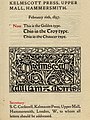
Kelmscott 출판사에서 사용하는 다른 활자체들 중 골든타입

ITC Golden Type type name as sample.


참조
- ^ a b Charles Harvey; Jon Press (1991). William Morris: Design and Enterprise in Victorian Britain. Manchester University Press. pp. 201–2. ISBN 978-0-7190-2419-1.
- ^ a b c Alexander S. Lawson (January 1990). Anatomy of a Typeface. David R. Godine Publisher. pp. 47–51. ISBN 978-0-87923-333-4.
- ^ Elisabeth Luther Cary (1902). William Morris: poet, craftsman, socialist. G. P. Pvtnam's Sons. pp. 219–230.
- ^ Katherine Bergeron (10 August 1998). Decadent Enchantments: The Revival of Gregorian Chant at Solesmes. University of California Press. pp. 27–35. ISBN 978-0-520-91961-7.
- ^ Irene Tichenor (2005). No Art Without Craft: The Life of Theodore Low De Vinne, Printer. David R. Godine Publisher. pp. 116–140. ISBN 978-1-56792-286-8.
- ^ a b c d e William S. Peterson (1991). The Kelmscott Press: A History of William Morris's Typographical Adventure. University of California Press. pp. 39, 81–95, 194–305. ISBN 978-0-520-06138-5.
- ^ Amert, Kay (April 2008). "Stanley Morison's Aldine Hypothesis Revisited". Design Issues. 24 (2): 53–71. doi:10.1162/desi.2008.24.2.53.
- ^ Peterson, William S. "The Type-designs of William Morris". Journal of the Printing Historical Society.
- ^ Dreyfus, John (1991). "A Reconstruction of the Lecture given by Emery Walker on 15 November 1888". Matrix. 11: 27–52.
- ^ Mosley, James. "Talbot Baines Reed, typefounder and sailor". Typefoundry. Retrieved 3 March 2016.
- ^ Neil Macmillan (2006). An A-Z of Type Designers. Yale University Press. p. 138. ISBN 0-300-11151-7.
- ^ Dreyfus, John (1974). "New Light on the Design of Types for the Kelmscott and Doves Presses". The Library. s5-XXIX (1): 36–41. doi:10.1093/library/s5-XXIX.1.36.
- ^ Tuohy, Stephen (1990). "A New Photograph of Edward Prince, Typefounders' Punchcutter". Matrix. 10: 135–142.
- ^ "Doves Type Revival". Type Spec. Retrieved 24 September 2016.
- ^ "Private Press Types". Elston Press. Retrieved 8 February 2017.
- ^ Leslie J. Workman; Kathleen Verduin (1996). Medievalism in England II. Boydell & Brewer Ltd. pp. 169–180. ISBN 978-0-85991-487-1.
- ^ Frederic William Goudy (1940). Typologia: Studies in Type Design & Type Making, with Comments on the Invention of Typography, the First Types, Legibility, and Fine Printing. University of California Press. pp. 148–155. ISBN 978-0-520-03308-5.
- ^ "ITC Golden Type". MyFonts. International Typeface Corporation. Retrieved 23 September 2016.
- ^ William S. Peterson (1991). The Kelmscott Press: A History of William Morris's Typographical Adventure. University of California Press. pp. 272–4. ISBN 978-0-520-06138-5.