메시에 5
Messier 5| 메시에 5 | |
|---|---|
 뱀자리의 구상 성단 메시에 5 | |
| 관찰 데이터(J2000 epoch) | |
| 학급 | 브이[1] |
| 콘스텔레이션 | 서펜스 |
| 적경 | 15h 18m 33.22s[2] |
| 적위 | +02° 04′ 51.7″[2] |
| 거리 | 24.5kly(7.5kpc)[3] |
| 겉보기 등급 (V) | 5.6[4] |
| 외관 치수(V) | 23′.0 |
| 물리적 특성 | |
| 덩어리 | 8.57×10⁵[5] M☉ |
| 반지름 | 80리 |
| 금속성 | / { } / { { } \ } \ end { small=– 1.12[6] dex |
| 예상 연령 | 10.62 Gyr[6] |
| 기타 명칭 | NGC 5904, GCl 34[7] |

메시에 5 또는 M5(NGC 5904)는 뱀자리에 있는 구상 성단이다.그것은 1702년 고트프리드 키르흐에 의해 발견되었다.
검출과 가시성
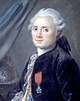
M5는 매우 좋은 조건하에서 단지 육안으로만 볼 수 있는 별 5 서펜티스에서 북서쪽으로 약 0.37도(22'(아크민))의 희미한 별입니다.쌍안경 및/또는 작은 망원경은 이 물체를 비항성으로 분해하며, 더 큰 망원경은 일부 개별 별들을 보여줄 것이며, 그 중 일부는 겉보기 등급 10.[8]6만큼 밝습니다.M5는 1702년 독일 천문학자 고트프리트 키르흐가 혜성을 관찰하던 중 발견했다.샤를 메시에가 1764년에 그것을 언급했고 혜성의 연구자인 그는 그것을 그의 성운 중 하나로 주조했다.윌리엄 허셜은 1791년 성단 내의 별들을 각각 분해한 최초의 인물이며, [9]대략 200개 정도 된다.
주목할 만한 별
M5에 있는 별 15개는 밝기가 가변적인 것으로 알려져 있으며, 이 중 97개는 거문고자리 RR 유형에 속합니다.때때로 "성단 변광성"으로 불리는 RR Lyrae 별은 세페이드형 변광성과 비슷하며, 광도와 주기 사이의 관계가 잘 알려져 있기 때문에 외계의 거리를 측정하는 도구로 사용될 수 있다.M5에서 가장 밝고 가장 쉽게 관측되는 변광성은 [8]26.5일 미만의 기간에 진도 10.6에서 12.1까지 다양합니다.

허블 우주망원경의 메시에 5 - 2.85도
「 」를 참조해 주세요.
레퍼런스
- ^ Shapley, Harlow; Sawyer, Helen B. (August 1927), "A Classification of Globular Clusters", Harvard College Observatory Bulletin, 849 (849): 11–14, Bibcode:1927BHarO.849...11S.
- ^ a b Goldsbury, Ryan; et al. (December 2010), "The ACS Survey of Galactic Globular Clusters. X. New Determinations of Centers for 65 Clusters", The Astronomical Journal, 140 (6): 1830–1837, arXiv:1008.2755, Bibcode:2010AJ....140.1830G, doi:10.1088/0004-6256/140/6/1830.
- ^ Paust, Nathaniel E. Q.; et al. (February 2010), "The ACS Survey of Galactic Globular Clusters. VIII. Effects of Environment on Globular Cluster Global Mass Functions", The Astronomical Journal, 139 (2): 476–491, Bibcode:2010AJ....139..476P, doi:10.1088/0004-6256/139/2/476, hdl:2152/34371.
- ^ "Messier 5". SEDS Messier Catalog. Retrieved 27 April 2022.
- ^ Boyles, J.; et al. (November 2011), "Young Radio Pulsars in Galactic Globular Clusters", The Astrophysical Journal, 742 (1): 51, arXiv:1108.4402, Bibcode:2011ApJ...742...51B, doi:10.1088/0004-637X/742/1/51.
- ^ a b Forbes, Duncan A.; Bridges, Terry (May 2010), "Accreted versus in situ Milky Way globular clusters", Monthly Notices of the Royal Astronomical Society, 404 (3): 1203–1214, arXiv:1001.4289, Bibcode:2010MNRAS.404.1203F, doi:10.1111/j.1365-2966.2010.16373.x.
- ^ "M 5". SIMBAD. Centre de données astronomiques de Strasbourg. Retrieved 2006-11-15.
- ^ a b Coutts Clement, Christine M.; Sawyer Hogg, Helen (August 1977). "The Bright Variable Stars in Messier 5". Journal of the Royal Astronomical Society of Canada. 71: 281. Retrieved 1 March 2021.
- ^ "William Herschel's Observations of the Messier Objects". www.messier.seds.org. Students for the Exploration and Development of Space. Retrieved 1 March 2021.
- ^ Neill, James D.; Shara, Michael M.; Caulet, Adeline; Buckley, David A.H. (June 2002). "The first orbital period for a dwarf nova in a globular cluster: V101 in M5". The Astronomical Journal. 123 (6): 3298–3304. doi:10.1086/340469. Retrieved 1 March 2021.
외부 링크

Wikimedia Commons에는 Messier 5와 관련된 미디어가 있습니다.
- SIMBAD: M5
- M5, SEDS Messier 페이지
- M5, 은하 구상 성단 데이터베이스 페이지
- M5의 과거 관측치
- Waid 천문대의 M5 이미지
- WikiSky의 Messier 5: DSS2, SDSS, GALEX, IRAS, Hydrogen α, X-Ray, Astrophoto, 스카이 맵, 기사 및 이미지


| 목록. |
|  |
|---|---|---|
| 「 」를 참조해 주세요. | ||